معرفی
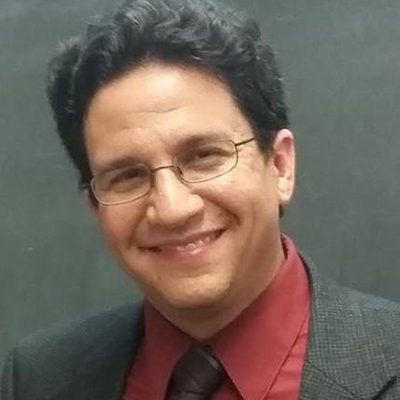
Javier Marion is Professor of History at Emmanuel College, specializing in Latin American and Andean history with a focus on social conflict, identity formation, and political agency. Based in the History department, he teaches courses spanning Colonial Latin America, Modern Latin America, Environmental History, and the American West, leveraging Emmanuel College's Fenway location for experiential learning through museums and historical districts.
Education:
- Ph.D. History, University of New Mexico
- B.A. Anthropology, University of New Mexico
Marion's research centers on how ethnic, class, and gender boundaries dissolve during social upheavals, particularly examining indigenous communities' roles in forging nationalism during the Andean wars of independence (1809-1825). His work bridges Latin American history with American West studies, emphasizing grassroots political identity and cultural resistance.
His 2025 publications analyze revolutionary networks in Charcas and indigenous women's solidarity systems, continuing a trajectory from his 2006-2017 scholarship on the Ayopaya Rebellion and guerrilla nationalism. This body of work reveals consistent themes of marginalized agency within colonial and post-colonial power structures across South America.
Honors and Awards:
- Fulbright Scholar Award (2020, deferred to 2022-2023 due to pandemic)
- Fulbright Full Grant, Institute of International Education (2001)
- Soledad Chávez Chacón Fellowship, University of New Mexico (2000, 1999)
Marion secures significant research funding including Fulbright grants and regional fellowships, supporting archival work in Bolivia and collaborative projects like his 2025 co-authored monograph with Norberto Benjamin Torres. His graduate-level seminars (HIST2701, HIST4000) train students in historical methodology while presenting at major conferences (LASA, NEHA, AHA) demonstrates active scholarly engagement.
He maintains strong regional academic ties through the Colleges of the Fenway consortium and presents research at institutions like Saint Anselm College and the Institute of Eastern Mediterranean Studies, reflecting collaborative approaches to Latin American historiography.