معرفی
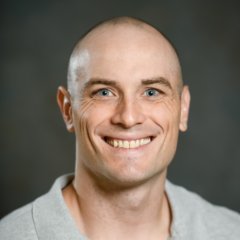
Dr. Jason Strickland is an Assistant Professor and Assistant Department Chair in the Biology Department at the University of South Alabama. He holds an adjunct position in the Department of Microbiology and Immunology. His research focuses on understanding how genomic changes influence phenotypic traits, particularly in venom evolution of snakes. He earned his Ph.D. in Conservation Biology (2018) from the University of Central Florida, an M.S. in Biology (2011) and B.S. in Biology (2009) from Angelo State University.
Education:
- Ph.D. - 2018: Conservation Biology, University of Central Florida
- M.S. - 2011: Biology, Angelo State University
- B.S. - 2009: Biology, Angelo State University
Research Interests:
Dr. Strickland’s work integrates field studies, lab experiments, and computational methods to explore adaptive evolution, venom evolution, and genotype-phenotype relationships. His lab uses venom as a model system due to its direct link between genes and toxic proteins. Key areas include venom complexity in rattlesnakes, genomic adaptations to environmental pressures, and the ecological impacts of venom variation. Collaborations span institutions like Florida State University and Universidad Juárez del Estado de Durango.
Awards & Grants:
- National Geographic Research and Exploration Grant (with Dr. Mark Margres)
- Editor’s Choice Award, Toxins journal (2021)
- Sigma Xi Grants in Aid of Research (2015)
Advising & Grants:
Current students include AJ Stewart (graduate, studying garter snake venom), Anne Elizabeth Thaxton (undergraduate, scorpion venom research), and Grace Coppinger (undergraduate, black-tailed rattlesnake variation). Past students have transitioned to careers in forensic science and military roles. Active grants address venom evolution in island ecosystems and genomic adaptations in watersnakes.
Labs & Teams:
His lab, the SSSTING Lab (Snakes, Scorpions, Spiders, Toxins, INformatics, Genomics), is based in the Life Sciences building. Collaborators include Dr. Darin Rokyta (Florida State University) and Dr. Gamaliel Castañeda-Gaytán (Universidad Juárez del Estado de Durango).