معرفی
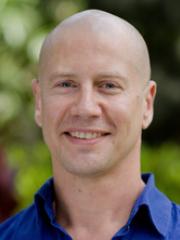
Professor Bryan Grieg Fry is a Professor at the School of the Environment, Faculty of Science, University of Queensland, and an Affiliate of the Centre for Marine Science. With over two decades of research experience, he leads the Adaptive Biotoxicology Lab focusing on venom evolution and toxinology. His work spans interdisciplinary approaches integrating ecology, evolution, and functional genomics to understand venom systems across diverse animal taxa.
Professor Fry earned his PhD from the University of Queensland in 2002 after completing dual undergraduate degrees in Molecular Biology and Scientific Philosophy from Portland State University. His academic journey has taken him to conduct field research in over 40 countries, from Norway to Antarctica, earning him induction into The Explorers Club.
Dr. Fry's research focuses on the evolution of venom systems across the animal kingdom, with particular expertise in snake, lizard, and marine animal venoms. His work ranges from discovering the shock-inducing hypotensive and anticoagulant venom of the Komodo Dragon to exploring temperature-specific adaptations of Antarctic octopus venoms. He investigates how venom composition relates to ecological roles in predation, defense, and competitor deterrence, with emphasis on coagulotoxic and neurotoxic mechanisms.
Analysis of his recent publications reveals strong trends in venom variation research, particularly ontogenetic and geographic differences in venom composition and activity. His work increasingly focuses on practical applications including antivenom development and therapeutic potential of venom components. The research spans multiple disciplines including molecular evolution, hematology, neuroscience, and pharmacology.
- Inducted into The Explorers Club for hazardous field research in over 40 countries
- Featured in over 100 documentaries across major networks including BBC, Discovery Channel, and National Geographic
Professor Fry has supervised numerous PhD students to completion, with current supervision focusing on scorpion pathophysiology, American pit viper venom variation, and anaconda ecology. His research has been supported by multiple ARC Discovery Projects, including current funding for 'Evolutionary models and biodiscovery tools from neurotoxic snake venoms' (2021-2024) and 'Functional evolution and therapeutic potential of snake venom coagulotoxins' (2019-2022).
He directs the Adaptive Biotoxicology Lab, which employs interdisciplinary approaches combining molecular biology, biochemistry, and evolutionary analysis. The lab has developed innovative methods for venom characterization and has made significant contributions to understanding venom resistance mechanisms in prey species.