Jan Martin Pawlowski
استاد · Quantum Field Theory
Max Planck Institute for Solid State Researchمعرفی
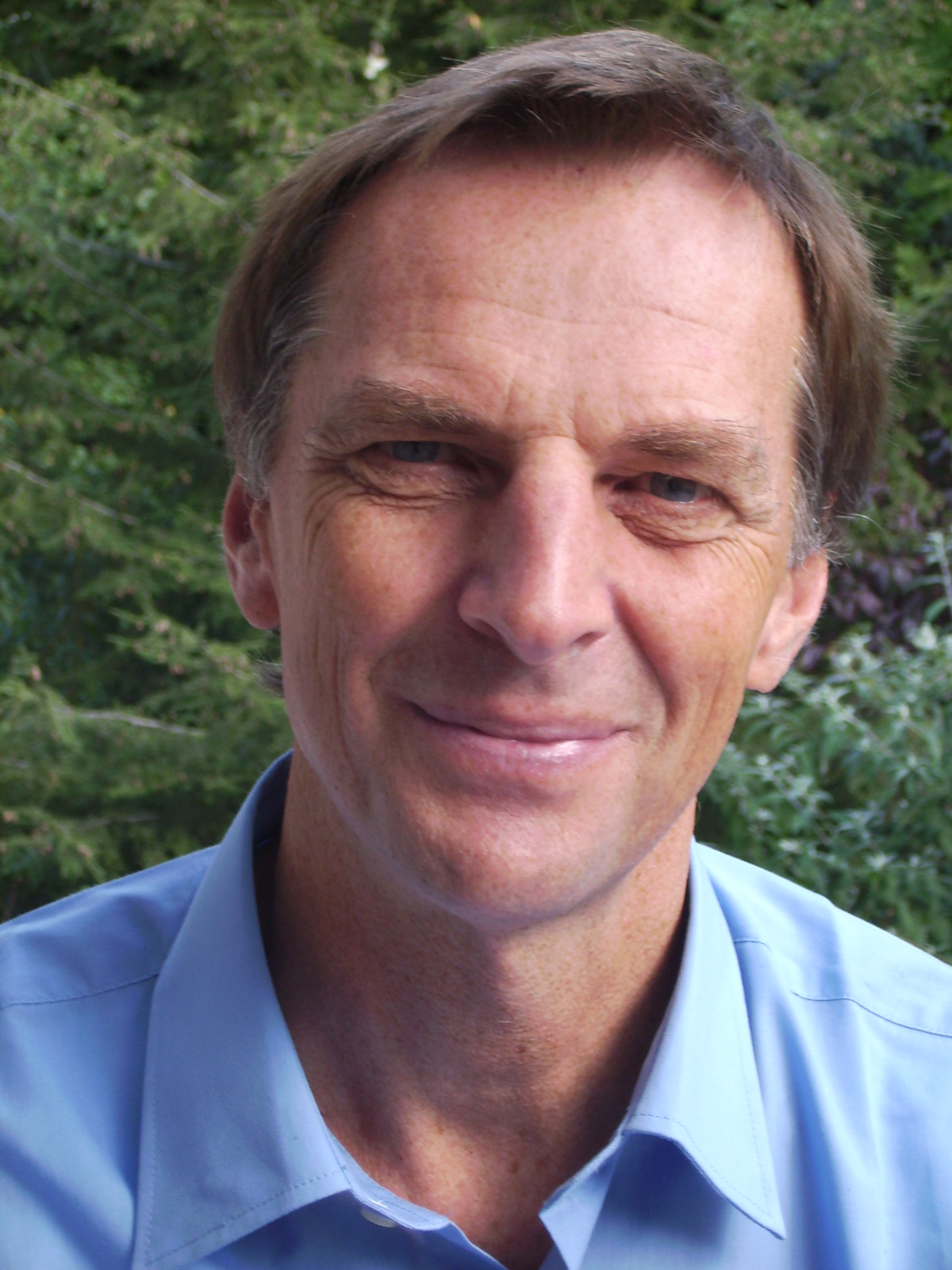
Jan Martin Pawlowski is a Professor at the Institute of Theoretical Physics at Heidelberg University's Faculty of Physics and Astronomy. With an h-index of 60 and over 11,000 citations from 4,210 documents across 234 publications and 134 preprints, he maintains an active research profile with significant contributions to theoretical physics. His work spans multiple institutions through collaborations with 292 co-authors worldwide.
Pawlowski's research focuses on fundamental aspects of quantum field theory, particularly Quantum Chromodynamics (QCD) and functional renormalization group methods. His interests include phase transitions in particle physics, quantum gravity, critical phenomena, and hadron physics. He has developed novel approaches to renormalization group flows, QCD at finite density, and the emergence of hadronic degrees of freedom from first-principles QCD. His recent work explores physics-informed renormalization group flows, the complex structure of Yang-Mills theory, and the QCD critical point.
Pawlowski's publication record shows consistent high-impact contributions across prestigious journals including Physical Review D, Annals of Physics, and Physics Letters B. His research demonstrates a clear trajectory from foundational theoretical work to applications in heavy-ion collisions and quantum gravity. His work bridges theoretical developments with phenomenological applications, particularly in the context of QCD phase structure and critical phenomena.
Among his notable contributions are the development of computational tools like the QMeS-Derivation Mathematica package for symbolic derivation of functional equations and DoFun for functional equations in Mathematica. His work on the functional renormalization group approach with dynamical hadronization has provided new insights into the emergence of hadrons and diquarks from QCD.
Pawlowski actively collaborates with researchers across multiple institutions, evidenced by his extensive co-author network. His recent publications (2023-2025) indicate ongoing research in asymptotically safe gravity, QCD phase structure, and computational methods for quantum field theory. His work on the absolute swampland and quantum gravity from dynamical metric fluctuations represents cutting-edge research at the intersection of particle physics and quantum gravity.