
معرفی
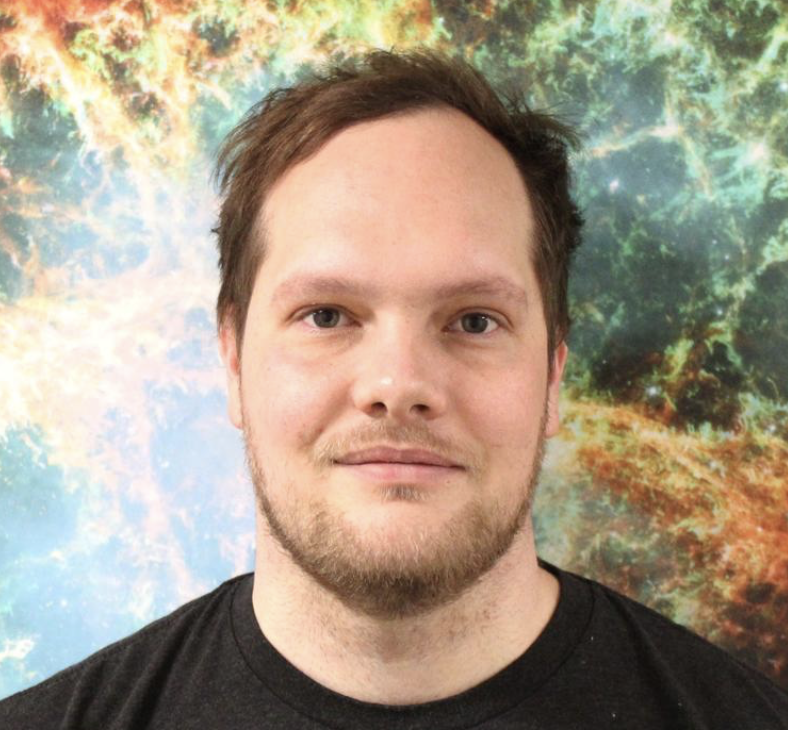
James R. Beattie is a Postdoctoral Research Fellow jointly appointed at Princeton University's Department of Astrophysical Sciences (Bhattacharjee group) and the Canadian Institute for Theoretical Astrophysics (Ripperda plasma-astro group). He completed his Ph.D. in theoretical astrophysics at the Australian National University in January 2024 under the supervision of Christoph Federrath. He maintains dual residences between Toronto, Canada and Princeton, United States to accommodate his joint appointments.
His educational background includes:
- Ph.D. (theoretical astrophysics), Australian National University, Canberra, Australia (2024)
- Honours (Astrophysics), Australian National University (2019)
- B.Sc. (physics), Queensland University of Technology, Brisbane, Australia (2018)
- B.Math. (applied and computational), Queensland University of Technology, Brisbane, Australia (2018)
- B.Ed. (secondary education), Queensland University of Technology, Brisbane, Australia (2013)
Dr. Beattie's research focuses on magnetized turbulence and dynamo processes across multiple scales in the Universe. His work spans from Earth's magnetosheath and the interstellar medium to the intracluster medium and plasma environments around compact objects. He employs theoretical frameworks of stochastic, fluctuating fluids and plasmas to investigate fundamental turbulence phenomena. His recent work includes the world's largest MHD turbulence simulation (10,0803 cells), reaching Reynolds numbers over a million, which has provided new insights into the energy spectra of magnetized turbulence in the interstellar medium.
Analysis of his recent publications reveals several key research trends. He has identified two coexisting kinetic energy cascades in magnetized interstellar medium turbulence, separating the plasma into scales that are non-locally interacting, supersonic and weakly magnetized (with spectrum n = 2.01) and locally interacting, subsonic and highly magnetized (n = 1.465). His work on supernova-driven turbulence has demonstrated fundamentally different energy cascades compared to classical Kolmogorov turbulence. He has also made significant contributions to understanding the supersonic turbulent dynamo, relativistic reconnection, and cosmic ray-plasma coupling mechanisms across diverse astrophysical environments.
Dr. Beattie has received recognition for his work, including:
- Publication in Nature Astronomy for "The spectrum of magnetized turbulence in the interstellar medium"
- Feature in New Scientist for the world's largest MHD turbulence simulation
- Feature in the Leibniz Supercomputing Centre newsletter
- Commentary in CNN on the turbulence properties of Van Gogh's Starry Night
Dr. Beattie actively mentors students and collaborators, including Matt Sampson at Princeton and Neco Kriel at ANU, who have led published studies under his guidance. His research is supported through his postdoctoral fellowships at CITA and Princeton, which have enabled him to conduct large-scale numerical simulations and theoretical investigations using advanced computational resources at institutions like the Leibniz Supercomputing Centre.
He is a member of several collaborative research teams:
- The Bhattacharjee group at Princeton University
- The Ripperda plasma-astro group at CITA
- International collaborations with researchers from ANU, UC Santa Cruz, Imperial College, Caltech, and others
- French ISM astrophysicists consortium
James R. Beattie در سایتهای دیگر
جستوجوهای مرتبط
شاید اینها هم برایتان مناسب باشند
 Alex LazarianUniversity of Wisconsin-Madison · استاد
 Stanislav BoldyrevUniversity of Wisconsin-Madison · استاد
 Sébastien GaltierPolytechnic Institute of Paris · استاد
 Huirong YanGerman Electron Synchrotron · استاد
 Glenn CiolekRensselaer Polytechnic Institute · مدرس ارشد
 Ellen ZweibelUniversity of Wisconsin-Madison · استاد