معرفی
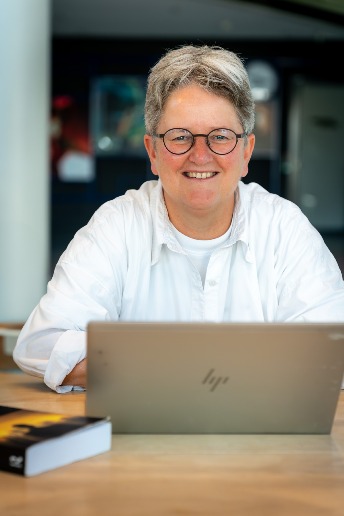
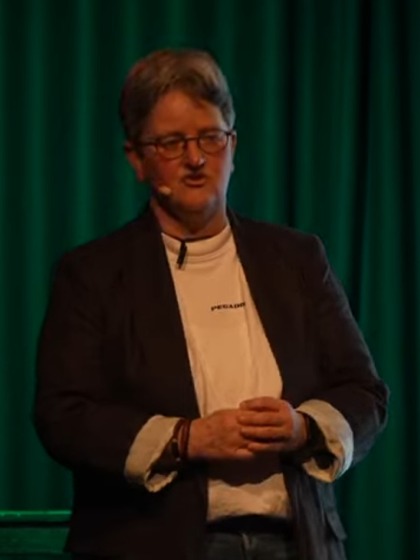
James Dawes is the DeWitt Wallace Professor of English and Creative Writing at Macalester College in St. Paul, Minnesota, where he also serves as director of the Program in Human Rights. His work bridges literary studies, human rights advocacy, and technology ethics, examining narrative structures across diverse contexts from creative writing to video game design.
Dawes received his Ph.D. in English Literature from Harvard University and his M. Phil. from Cambridge University. He was previously a Junior Fellow at the Society of Fellows, Harvard University. His educational background reflects a strong foundation in literary theory and humanistic inquiry that informs his interdisciplinary approach.
His research focuses on human rights documentation, the ethics of storytelling, artificial intelligence, and the psychological mechanisms behind both extraordinary cruelty and compassion. Dawes investigates how narrative frameworks shape our understanding of violence and trauma across multiple media forms. His work demonstrates particular expertise in perpetrator psychology, having conducted interviews with convicted war criminals from the Second Sino-Japanese War.
Analysis of his recent publications reveals a clear trajectory toward examining the intersection of emerging technologies and human rights. Starting with his foundational work on perpetrator psychology in 'Evil Men,' Dawes has increasingly focused on autonomous weapons systems and AI ethics. His articles consistently address the ethical implications of technological advancement for international humanitarian law, with particular emphasis on the urgent need for global governance frameworks.
Dawes has received significant scholarly recognition:
- International Human Rights Book Award for 'Evil Men'
- Independent Publisher Book Award Finalist for 'That the World May Know: Bearing Witness to Atrocity'
As a prominent public intellectual, Dawes has written for or appeared as a featured guest on media outlets ranging from National Public Radio, the BBC, and Bulgarian National Radio to the Boston Globe, the Chronicle of Higher Education, and CNN.com. His scholarship bridges academic rigor and public discourse, bringing critical perspectives on human rights and technology to broad audiences. He has been particularly active in advocating for international regulation of autonomous weapons systems, testifying before international bodies and engaging with policymakers on these critical issues.