معرفی
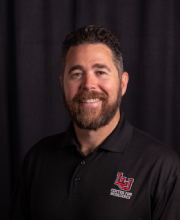
Dr. James Curry serves as Department Chair and Associate Professor in the Department of Industrial and Systems Engineering at Lamar University's College of Engineering, while also directing Online Programs and Outreach for the College. His leadership drives the development of innovative engineering education pathways and industry-focused research initiatives.
Dr. Curry earned his Ph.D. in Industrial Engineering from Texas A&M University, complemented by an M.S. in Operations Research and Industrial Engineering and a B.S. in Mechanical Engineering from the University of Texas.
His research integrates Logistics and Scheduling, Software Development, and Natural Language Generation with practical applications in Supply Chain Management and Optimization. Current work focuses on marine safety culture assessment, where he develops computational frameworks for processing safety data and generating natural language reports. This bridges theoretical optimization with real-world industrial engineering challenges, particularly in offshore energy systems.
Analysis of Dr. Curry's 15 most recent publications reveals a strategic shift from pure algorithm development toward interdisciplinary applications. Recent work emphasizes safety culture assessment toolkits for offshore industries and machine learning applications in environmental modeling, demonstrating growing collaboration between engineering education, marine safety, and data science domains.
Dr. Curry's scientific recognition includes:
- Anita Riddle Excellence in Engineering Teaching Fellowship
As an active mentor, he has guided 14 graduate students through doctoral and master's research while securing $1.5+ million in funding across 10 projects. His grant portfolio spans NSF education initiatives, National Academies safety research, and industry partnerships with American Bureau of Shipping, focusing on practical solutions for marine safety and engineering education innovation.
The Mariner Safety Research Initiative processes over 100,000 safety events from international marine organizations, developing assessment toolboxes that translate complex data into actionable safety improvements. This lab serves as a nexus for students to gain hands-on experience with industry-standard safety systems and international collaboration networks.