معرفی
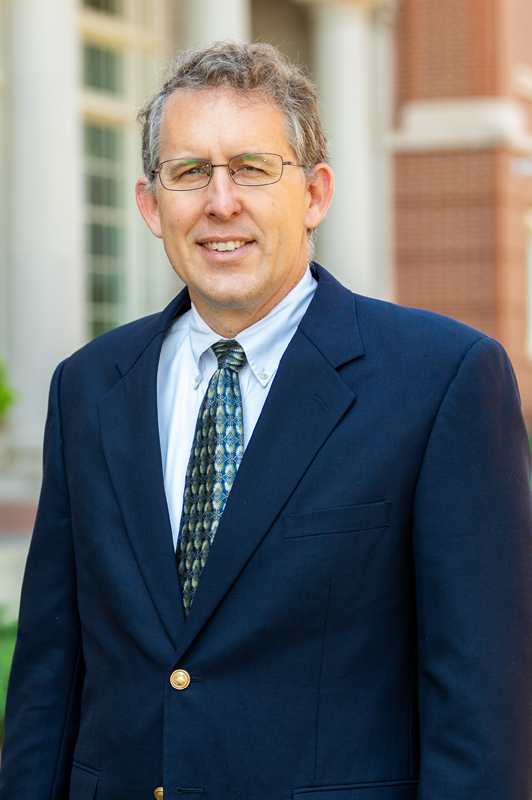
James Barber is the Jon R. & Beverly S. Holt Professor of Engineering and Arthur F. Thurnau Professor of Mechanical Engineering and Applied Mechanics at the University of Michigan's College of Engineering. With over 50 years of academic career spanning from his education at Cambridge University to his current distinguished position, Professor Barber has established himself as a leading authority in solid mechanics, particularly in contact mechanics, tribology, elasticity, and thermoelasticity.
His research interests encompass a broad range of solid mechanics topics including thermoelasticity, elasticity, solidification, contact mechanics, tribology, elastodynamics, fracture, stability of thermoelastic contact, friction, and contact of rough surfaces. Professor Barber's work has significant applications in automotive and transportation engineering, particularly in understanding clutch and braking systems.
Professor Barber's publications demonstrate a consistent focus on fundamental mechanics problems with practical engineering applications. His recent work (2019-2025) shows continued innovation in contact mechanics, with particular emphasis on frictional systems, rough surface interactions, and applications to advanced manufacturing and nuclear engineering. His research consistently bridges theoretical mechanics with practical engineering applications.
- Textbook Excellence Award, Text and Academic Authors, 2012
- Archie Higdon Distinguished Educator Award, The American Society for Engineering Education, 2010
- Daniel C. Drucker Medal, American Society of Mechanical Engineers, 2009
- Arthur F. Thurnau Professorship, 2005-
- Mayo D Hersey Award, ASME, 2017
- Ted Belytschko Applied Mechanics Award, ASME, 2015
- A.F. Davis Silver Medal, American Welding Society, 1998
Professor Barber has mentored numerous PhD students throughout his career, adopting a collaborative advising style that emphasizes independent thinking. His research has been supported by various funding sources including Rackham and discretionary funds, with opportunities for students to attend Contact Mechanics Symposia and Tribology meetings. His laboratory work focuses on theoretical problems and computational approaches to gain insights into general cases in solid mechanics.