معرفی
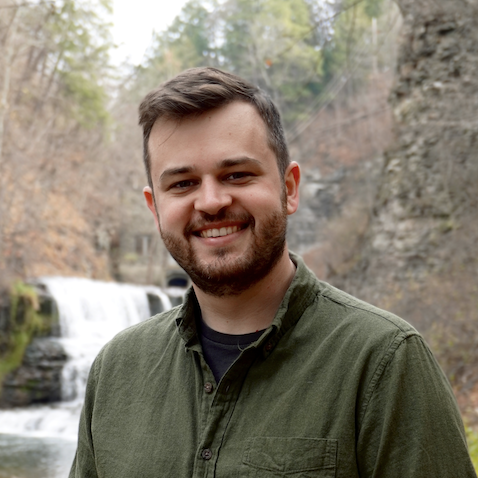
Jake Welde serves as an Assistant Professor in the Sibley School of Mechanical and Aerospace Engineering at Cornell University's College of Engineering, having joined the faculty in 2025. His expertise bridges robotics, differential geometry, and control theory, with prior academic training completed entirely at the University of Pennsylvania.
His educational background includes:
- Ph.D. in Mechanical Engineering and Applied Mechanics from the University of Pennsylvania (2025)
- M.S. in Robotics from the University of Pennsylvania (2020)
- B.S. in Mechanical Engineering and Applied Mechanics from the University of Pennsylvania (2019)
Professor Welde's research centers on exploiting structural properties like symmetry and geometric mechanics to develop explainable controllers for robotic systems. His work targets efficient controller synthesis, accelerated learning algorithms, and advanced robot morphologies, with specific applications in aerial vehicles and underactuated systems. He integrates classical control theory with machine learning approaches while emphasizing mathematical rigor through dynamical systems theory.
Analysis of his publications reveals a progression from foundational work on underactuated aerial manipulators (2021) toward symmetry-exploiting learning controllers (2025). Recent research increasingly focuses on comparative studies between classical and learned control methods, particularly for quadrotor trajectory tracking, while maintaining theoretical contributions to global stability analysis on Riemannian manifolds.
His scientific recognition includes:
- RSS Pioneer award at Robotics: Science and Systems (2024)
- John A. Goff Prize from University of Pennsylvania (2024)
- Best Contribution award at NeurReps Workshop, NeurIPS (2024)
- ICRA Best Paper Finalist in Unmanned Aerial Vehicles (2021)
- National Science Foundation Graduate Research Fellowship (2019)
No specific details regarding student advising or research grants were provided in the source material, though his service interests include K-12 STEM outreach and interdisciplinary research community building.
While current laboratory affiliations at Cornell are unspecified, his prior work at Penn's GRASP Laboratory informs his hands-on teaching philosophy focused on abstract thinking through practical implementation.