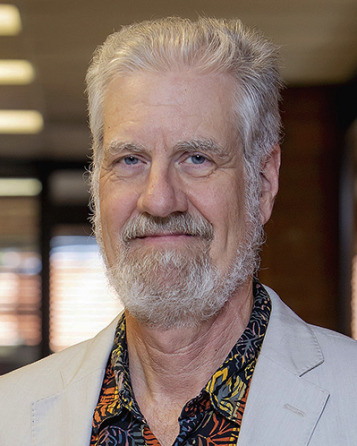
معرفی
Jacobus J Barnard is a Professor in the Department of Computer Science at the University of Arizona, College of Engineering. He is actively involved in teaching and research, with a focus on computer vision, machine learning, and interdisciplinary applications in emotion dynamics, biology, and planetary science.
- Department: Computer Science
- School: College of Engineering
- University: University of Arizona
- Academic Rank: Professor
His research interests are centered on Computer Vision, Probabilistic Modeling, and Machine Learning, with applications in emotion regulation, biological structure analysis, and remote sensing. He develops statistical models for understanding indoor scenes, tracking biological motion, and analyzing social and emotional dynamics. His work integrates vision and language, with generative models linking image regions to semantic concepts.
The recent publications reflect a strong trend in deep learning for image restoration (e.g., fiber bundle imaging), Bayesian modeling in planetary science (crater shape analysis), and interdisciplinary AI (emotion dynamics, gene expression). His work spans computer science, psychology, biology, and engineering, often combining statistical inference with real-world data from microscopy, aerial imaging, and human behavior studies.
Scientific Awards:
- No explicit awards listed in the provided text.
Barnard has advised numerous students, including PhD candidates and honors undergraduates, working on topics such as gesture authentication, pollen tube tracking, and emotion modeling. He has not received mention of major grants, but his sustained publication record and interdisciplinary collaborations suggest active funding. He teaches core courses like Intro to Computer Vision and Probabilistic Graphical Models, and supervises dissertation and independent study research.
He is involved in developing computational models for understanding biological structures (e.g., Alternaria fungus, Drosophila neurons), emotion regulation in couples, and automated trail detection in aerial imagery. His lab appears to focus on statistical vision, with strong ties to cognitive science and bioinformatics.