معرفی
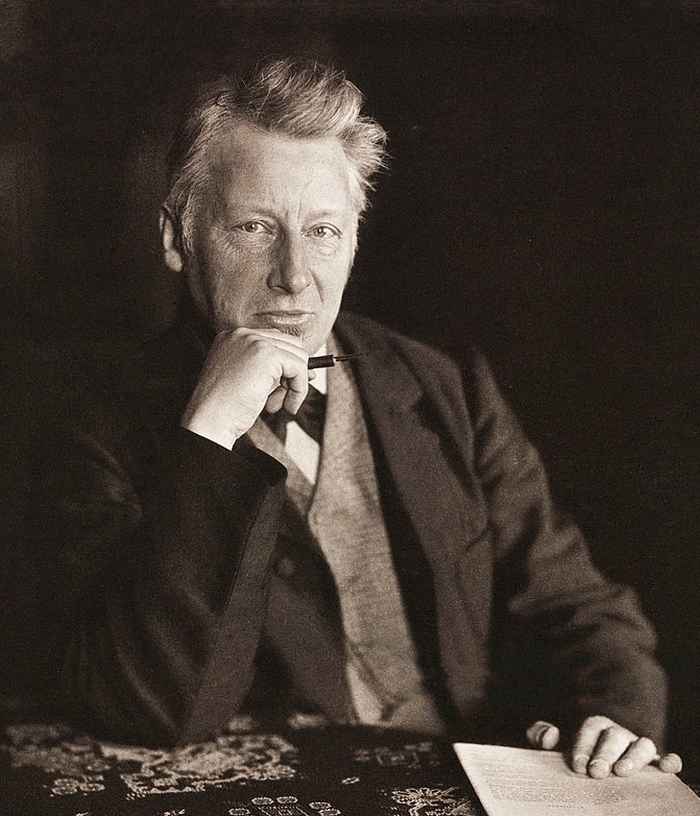
Jacobus Henricus van 't Hoff (1852–1911) was a Dutch chemist and the first Nobel Prize laureate in Chemistry (1901). He served as a Professor of Chemistry, Mineralogy, and Geology at the University of Amsterdam (1878–1896) and later at the Prussian Academy of Sciences in Berlin (1896–1911). His groundbreaking contributions include the foundation of stereochemistry (tetrahedral carbon atom theory), laws of chemical dynamics, and osmotic pressure in solutions. His work laid the groundwork for physical chemistry and influenced fields like thermodynamics and chemical equilibrium.
Education: Studied at Delft Polytechnic (1871), Leiden University, and obtained his PhD from Utrecht University (1874). His research spanned molecular structure, chemical equilibria, and the Van 't Hoff-Le Chatelier principle. Awards include the Nobel Prize and membership in the Royal Netherlands Academy of Arts and Sciences.
His legacy is honored through institutions like the Van 't Hoff Institute for Molecular Sciences at Utrecht University and a monument in Rotterdam. Key works include studies on stereochemistry and solutions, revolutionizing understanding of molecular behavior and solution dynamics.