معرفی
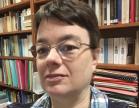
Isabella Pignocco is a Research Fellow at the University of Catania's Department of Religious Studies within the Faculty of Humanities. She holds this position under the PRIN 2022 Project "Resilient Septuagint. An Initial Exploration of the Semantics of Killing and Healing in the Septuagint and Its Reception in Patristic and Late Antique Sources (3rd cent. BCE–5th cent. CE)" with disciplinary focus on History of Christianity and the Churches (M-STO/07). Her research is supervised by Professor Arianna Rotondo and is linked to Work Package 8 "uBIQUity" of the PNRR project "ITSERR – Italian Strengthening of the ESFRI RI RESILIENCE".
Her educational background includes a Master's Degree in Philology, Literature, and Ancient History from the University of Turin (2023), where she graduated with honors (110/110 with lode) for her thesis "L'imperatrice e il mago: analisi dei rapporti tra il secondo libro del De Sancto Cypriano di Eudocia Augusta e la Confessio Cypriani." She also earned a Bachelor's Degree in Literature with an ancient-medieval curriculum from the same institution (2019). Additional training includes the "Digital Tools for Humanists" summer school at the University of Pisa and specialized Digital Humanities courses at the University of Turin.
Pignocco's research centers on the development of EnGraSept, a dataset based on the Göttingen critical edition of the Septuagint designed to identify biblical citations and allusions within patristic literature, particularly Clement of Alexandria's Protrepticus and Nonnus of Panopolis's Parafrasi del Vangelo. Her work bridges traditional philological methods with computational approaches, focusing on text reuse analysis and digital scholarly editions. She possesses advanced technical skills in XML/TEI encoding, RDF-Turtle, JSON, and various digital humanities tools including EVT-2 for digital critical editions.
Her recent scholarly contributions demonstrate a consistent focus on the intersection of biblical studies, digital humanities, and patristics, with particular attention to semantic analysis of biblical concepts in early Christian literature. The research trajectory shows increasing sophistication in computational methods applied to textual analysis of ancient sources, with growing participation in international collaborations through the ITSERR project.
Pignocco is an active member of professional organizations including AIUCD (Association for Digital Humanities and Digital Culture) and EADH (The European Association for Digital Humanities). She has presented her work at numerous international conferences and workshops, including events at the University of Bologna, University of Naples L'Orientale, and the Society of Biblical Literature meeting in Amsterdam.
Her technical expertise spans digital text encoding, computational linguistics applications to ancient texts, and digital scholarly publishing. She has collaborated with multiple institutions including the University of Bologna, University of Modena and Reggio Emilia, and the Foundation for Religious Sciences (Fscire) on interrelated projects examining sacred texts in the digital world.