معرفی
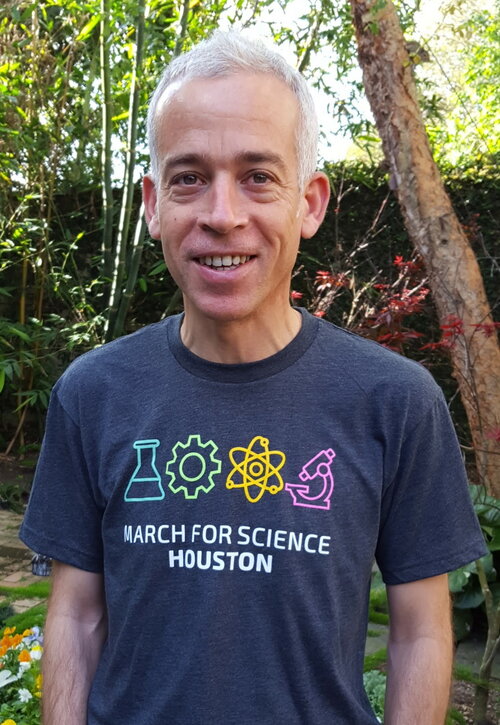
Ilya Nemenman is the Samuel Candler Dobbs Professor of Physics and Biology at Emory University's College of Arts and Sciences. He is a theoretical physicist who has been instrumental in establishing Emory as a global leader in theoretical and modeling approaches to living systems, recognized as a 2021 Simons Investigator.
His educational background includes a Ph.D. from Princeton University (2000), with additional education at Belarusian State University. He completed postdoctoral training at the NEC Research Institute and the Kavli Institute for Theoretical Physics.
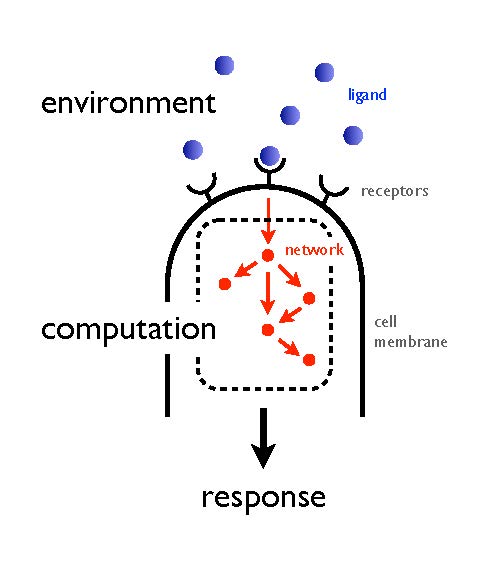
Nemenman's research focuses on understanding how biological systems learn from and respond to their environment through what he terms "biological information processing." He seeks to identify computational primitives employed by living organisms and determine if phenomenological, coarse-grained representations of biological processes can be functionally accurate. His work spans theoretical biophysics, coarse-grained modeling in systems biology and neuroscience, information transduction in biological systems, and learning and adaptation across molecular, neural, and evolutionary scales.
Nemenman leads the Theory and Modeling of Living Systems (TMLS) initiative at Emory, which unites researchers from multiple departments and institutions to understand biology with precision comparable to physical sciences. His research group studies diverse systems including primate visual brain, neural signal transduction in C. elegans, cellular suicide dynamics, and multicellular effects in cellular signaling.
- Simons Investigator (2021)
- Winship Distinguished Research Professor of Physics and Biology (2017-2020)
- Fellow, American Physical Society (2016)
- General Member, Aspen Center for Physics (2015-2025)
- Phi Beta Kappa mentor recognition (2013, 2015)
- Chair Line, Division of Biological Physics, American Physical Society (2013-2017)
- McDonnell Foundation 21st Century Science Initiative Fellow
Nemenman mentors postdoctoral researchers, including Audrey Sederberg who joined the faculty at the University of Minnesota, and Andrew Mugler who received the NSF CAREER Award and is now an assistant professor at the University of Pittsburgh. His research has been supported by significant grants including the Simons Foundation award providing $100,000 annually for five years.
He is affiliated with multiple research initiatives including The New Mexico Consortium and The Center for Nonlinear Studies at LANL, and has collaborated extensively with experimental researchers to apply theoretical approaches to real biological systems.