معرفی
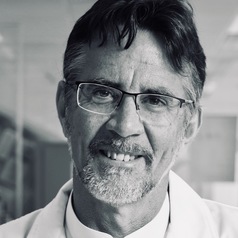
Dr. Ian Hunt is an Adjunct Senior Lecturer in Agriculture and Food Systems at the University of Tasmania, affiliated with the Tasmanian Institute of Agriculture (TIA). He leads statistics and data science services for researchers and PhD students, and teaches statistics and programming (R, Python, MATLAB) at undergraduate and postgraduate levels. His academic work spans multiple disciplines, integrating statistical theory with practical applications in agriculture, medicine, law, and environmental science.
His research interests include applied statistics, computational statistics, statistical inference, model selection, and uncertainty quantification. He specializes in translating complex statistical concepts for non-specialists and applying them to real-world scientific challenges. His expertise supports interdisciplinary research in food safety, plant science, animal health, and climate-smart agriculture.
His recent publications span diverse fields such as agricultural science, food microbiology, medical research, and statistical methodology. These works demonstrate a strong trend in using data science and statistical modeling to optimize agricultural outputs, improve food safety, and inform clinical and legal decisions. Common themes include predictive modeling, experimental design, and the use of novel sensor technologies (e.g., eNose) for quality assessment.
- Chartered Statistician (CStat)
- Fellow of the Royal Statistical Society (RSS)
- Member of RSS Committee for Statistics and the Law
Dr. Hunt is actively involved in research supervision and grant-funded projects. He supervises PhD students working on eNose data analysis, smart-farm dairy systems, and cannabinoid production. His current grants include projects on virtual fencing, greenhouse gas reduction in livestock, integrated pest management, and soil health monitoring. These projects are funded by organizations such as the Department of Natural Resources and Environment Tasmania, Horticulture Innovation Australia, and the CRC for High Performance Soils.
He contributes to national and international research communities through invited talks at Royal Statistical Society conferences and co-chairing seminars on law and algorithms. His work bridges data science with practical agricultural and societal challenges, emphasizing collaboration, innovation, and knowledge transfer.