معرفی
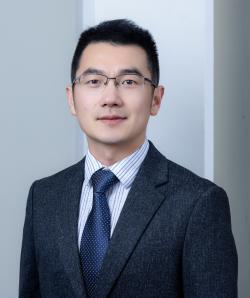
Dr. Huachao Mao serves as an Assistant Professor at Purdue University's School of Engineering Technology, where he directs the Additive & Intelligent Manufacturing (AIM) Lab. His research bridges nanoscale precision with additive manufacturing, focusing on applications in optics, microfluidics, and biomedical technologies through innovations in process engineering and computational modeling.
His academic foundation includes:
- Ph.D. in Industrial and Systems Engineering, University of Southern California, 2019
- M.S. in Computer Science, University of Southern California, 2018
- M.S. in Control Science and Engineering, Tsinghua University, China, 2014
- B.E. in Mechanical Engineering and Automation, Beihang University, China, 2011
Dr. Mao's research centers on precision Additive Manufacturing processes for optics, functional polymers, microfluidics, and structural composites, coupled with advanced computing for manufacturing including digital twin development, topology optimization, and AI/ML-driven process control. His work pioneers techniques like adaptive slicing, mask image optimization, and precision spin coating to achieve nanoscale accuracy in complex 3D geometries, enabling breakthroughs in optical devices and biomedical applications.
Analysis of his recent publications reveals a dominant focus on vat photopolymerization advancements, particularly for optical and microfluidic applications. His work consistently integrates AI/ML for process optimization while expanding into functional materials like index-matching resins and conductive polymers, with growing emphasis on educational frameworks for smart manufacturing.
His scientific contributions have been recognized with:
- Best Paper Award, ASME MSEC 2021
- Best Paper Award, NAMRC 2016
- Best Paper Award, NAMRC 2018
- Purdue Departmental Achievement Award 2024
- Outstanding Faculty in Discovery at Purdue Polytechnic 2025
Dr. Mao actively mentors graduate researchers and leads NSF-funded projects developing 3D-printed optical AI processors and robotic e-skin. His lab currently recruits Ph.D. students for Fall 2025 to advance multi-material printing and digital twin applications. As an editorial board member for Micromachines and Digital Manufacturing Technology, he shapes the field's scholarly discourse while reviewing for top journals including Nature and Science Robotics.
The Additive & Intelligent Manufacturing Lab serves as the operational hub for Dr. Mao's research, driving innovations in liquid crystal display-based printing, microfluidic device fabrication, and precision optical manufacturing through interdisciplinary collaboration between materials science, robotics, and computational engineering.