معرفی
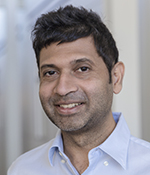
Hiroki Yamamoto serves as an Assistant Professor (without tenure) in the Department of Electrical Engineering and Bioscience at Waseda University's School of Advanced Science and Engineering since September 2022, following his tenure as an Assistant at the same institution from April 2018 to March 2021.
His academic foundation was built entirely at Waseda University:
- 2012.04 - 2021.03: School of Advanced Science and Engineering, Department of Electrical Engineering and Bioscience
- Prior to 2012.03: School of Science and Engineering, Department of Electrical Engineering and Bioscience
Dr. Yamamoto's research centers on microbial morphology and collective dynamics, specializing in cyanobacterial systems. He investigates how filamentous cyanobacteria like Pseudanabaena form complex colony patterns through cell motility and intercellular interactions, with particular focus on comet-like wandering clusters and disk-like rotating clusters. His methodology integrates live-cell imaging, quantitative trajectory analysis, and mathematical modeling to decode self-organization principles in bacterial collectives.
Analysis of his publications reveals consistent exploration of cyanobacterial collective motion mechanics, emphasizing nematic alignment during filament collisions, velocity coordination in migrating clusters, and transition dynamics between wandering and rotating states. This work bridges microbiology, biophysics, and complex systems theory through experimental validation of simplified mathematical frameworks.
He actively participates in Waseda University's internal research initiatives under Prof. Hideo Iwasaki's supervision, including genetic transformation system development for Pseudanabaena sp. NIES-4403 (2020) and individual movement tracking within collective motion (2024), demonstrating commitment to uncovering genetic mechanisms underlying bacterial self-organization.
Dr. Yamamoto operates within Prof. Iwasaki's biophysics research group, contributing to interdisciplinary investigations of microbial collective behavior through advanced microscopy and computational approaches.