معرفی
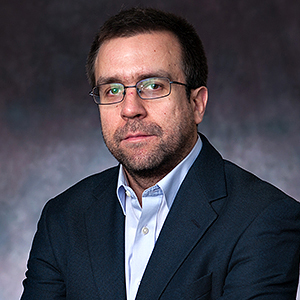
Hilmi Ulas serves as Assistant Professor of Peace Studies within the Wilkinson College of Arts, Humanities, and Social Sciences at Chapman University. A Cypriot scholar-practitioner of conflict resolution, he teaches across all undergraduate levels from introductory courses to capstone projects with an emphasis on discussion-based and experiential learning approaches incorporating simulations, games, and projects.
Dr. Ulas's educational background includes a Bachelor of Arts in Political Science and French from Grinnell College, followed by both a Master of Science and Ph.D. in Conflict Analysis and Resolution from George Mason University. His doctoral research focused on evaluating the impact of state unrecognition on conflict and conflict resolution processes.
His scholarly work centers on conflict resolution in unrecognized states, democratization processes, nonviolent resistance, and the intersection of peace and conflict in fiction. His comparative research examines cases including Northern Cyprus, Abkhazia, and Taiwan to understand how pro-democracy movements function in contexts with limited international recognition. His publications reveal consistent thematic focus on sovereignty dynamics, population displacement, and the challenges of peacebuilding in contested territories.
As advisor for the Peace Studies Major at Chapman, Dr. Ulas actively guides students through their academic journey and post-graduation career planning. His professional experience includes serving as Chair of the Department of Political Science and Public Administration at the American University of Cyprus and teaching conflict resolution courses at George Mason University.
Dr. Ulas maintains an active scholarly profile with recent publications in Frontiers in Political Science, Journal of Liberty and International Affairs, and Macedonian Political Science Journal. His work demonstrates growing influence in the field of unrecognized states and conflict resolution, particularly regarding the dynamics of social movements operating under authoritarian-leaning conditions with minimal international oversight.
His scholarly contributions connect theoretical frameworks like Political Process Theory with practical applications in conflict zones, offering valuable insights into how domestic political-economic factors rather than regime type often determine the emergence and success of pro-democracy movements in unrecognized states.