معرفی
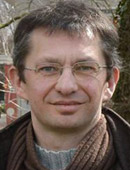
Hervé Davodeau is Professor of Geography at Institut Agro Rennes-Angers, teaching in the Social Sciences Department with landscape engineers. He conducts research at UMR Espaces et Sociétés (ESO, CNRS) and serves as Scientific Director of the Angers Social Atlas. As UMR ESO referent at Agro Rennes-Angers Institute, he contributes to ESO research axis 3: 'The (re)localization of politics: a process under tension' (2022-2027) and the ATLAS research site.
His academic background includes a 2003 doctoral thesis on 'Landscape sensitivity put to the test of territorial management' and a 2020 Habilitation à Diriger des Recherches (HDR) from EHESS in Paris. His research focuses on 'landscape action,' examining landscapes as sites of political engagement, social meaning, and environmental negotiation within public policies, professional planning practices, environmental conflicts, and education.
Davodeau's recent publications reveal strong thematic focus on urban vegetation strategies, public space criticism, and landscape governance. His work explores how everyday landscapes become climate change symbols, analyzes Anjou's green infrastructure approaches, and examines landscape plan implementation. He frequently collaborates with researchers like Elise Geisler and Sébastien Caillault, producing interdisciplinary work that bridges theoretical geography with practical landscape management.
His current research projects include 'What cultures can we use to adapt to global change and reshape our living spaces?' (POPSU funded), 'Landscapes in trends: after 30 years of landscape law' (Ministry of Ecology funded), and 'Criticism and landscape project' (ESO funded). He also participates in the ANR project 'Architects, urban planners and landscapers, facing the 21st century challenges' (ProMetUrba21).
Davodeau actively supervises doctoral research, with Pierre-Louis Bodet's 2022 thesis on 'Landscape Plans in France' being a recent example. His methodological approach combines qualitative geographical methods with participatory action research, influencing both policy development and professional landscape practice through his innovative frameworks for understanding people-space-environment relationships.