معرفی
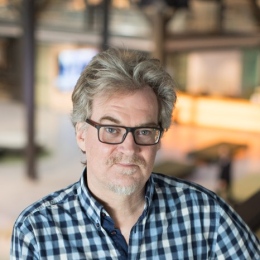
Henrik Hansson is a Professor of Computer and Systems Sciences at Stockholm University, a position he has held since 2019 after serving as an Associate Professor in the same department from 2009 to 2019. He is affiliated with the Department of Computer and Systems Sciences and is actively involved in two research groups: Distributed Immersive Participation and the Learning Analytics and AI for Education Group.
His educational background includes a PhD in Educational Sciences and Audiology from Stockholm University and Karolinska Institutet (1993), a Bachelor's degree in Social Sciences from Stockholm University (1989), and qualification as an Audiologist from the University College of Health Sciences in Gothenburg (1987).
Hansson's research focuses on the intersection of technology and learning, with particular interests in technology-enhanced learning, capacity-building, digital transformation and sustainability, e-Health, e-Learning, culture and digitalization, and AI. He is driven by a vision of how technology can create innovative solutions that promote digital inclusion and support sustainable development globally. His current research emphasizes capacity-building for Ukrainian universities through the U-Train project and CPR technology using sensor-based devices.
His recent publications demonstrate a strong focus on educational challenges during wartime, particularly in Ukraine, as well as innovations in healthcare technology. These works reflect his commitment to addressing real-world problems through technology, with emphasis on resilience, accessibility, and practical implementation in crisis situations.
Hansson has supervised 12 PhD students and mentored over 300 bachelor's and master's students throughout his career. On average, he supervises around 50 master's and bachelor's students each year, often connecting their thesis work with research projects and real-world problems. His collaborations span diverse sectors including companies like Ericsson and PostNord, public institutions such as schools and museums, and international partners across Ukraine, Sri Lanka, Uganda, Rwanda, Bangladesh, Greece, Bulgaria, Spain, Moldova, Romania, Finland, Myanmar, Zimbabwe, South Africa, England, and Peru.
He has led and managed 16 large-scale international research and development projects funded by organizations including the EU, Sida (Swedish International Development Cooperation Agency), the Swedish Institute, and the Inter-American Development Bank. These projects have taken him across Europe, Asia, Africa, and Latin America, with specific initiatives focusing on ICT and education, diaspora entrepreneurship, and medical language support tools.