معرفی
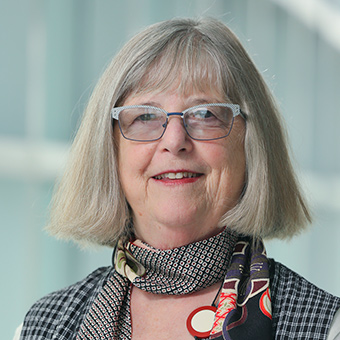
Professor Henrietta Mondry is a distinguished academic at the University of Canterbury, holding dual appointments in the Department of Global, Cultural and Language Studies and English within the Faculty of Arts since 1994 and 2013 respectively. She maintains an active research profile with numerous international collaborations and publications extending into 2025.
Her primary research interests encompass literary studies with a focus on literature and cultural history from the nineteenth century to the present. She has published extensively on Russian/Soviet, European and South African literature, with particular expertise in the literary canon (Dostoevsky, Tolstoy, Chekhov, Turgenev), formerly 'forgotten' writers, and Russophone emigre writing. Her interdisciplinary approach examines cultural and scientific underpinnings of discourses of alterity in ethnicity, gender, and species.
Professor Mondry's recent publications demonstrate a consistent focus on human-animal relations, Jewish themes in Russian literature, bioethics in Soviet fiction, and cultural memory. Her work bridges literary analysis with anthropological and philosophical perspectives, particularly examining cross-species relations and ethnocultural identity in post-Soviet contexts. She has pioneered research on previously marginalized writers like Konstantin Leontiev and Vasily Rozanov.
Among her notable recognitions is her Fellowship in the Royal Society of New Zealand since 2009. She has received prestigious international fellowships including appointments at Durham University's Institute of Advanced Studies, Stellenbosch Institute for Advanced Study, Oxford Centre for Hebrew and Jewish Studies, and Bundesinstitut for East European Studies in Cologne.
Professor Mondry actively supervises graduate research students and has served on numerous prestigious committees including the Royal Society of New Zealand Humanities Fellowship Selection Committee and the NZ Royal Society's Humanities Medal Committees. Her teaching encompasses Russian language acquisition at intermediate and advanced levels, as well as courses on literature and film adaptation, prison writing, and honors courses on the short story.