معرفی
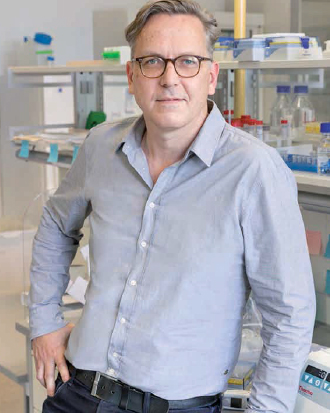
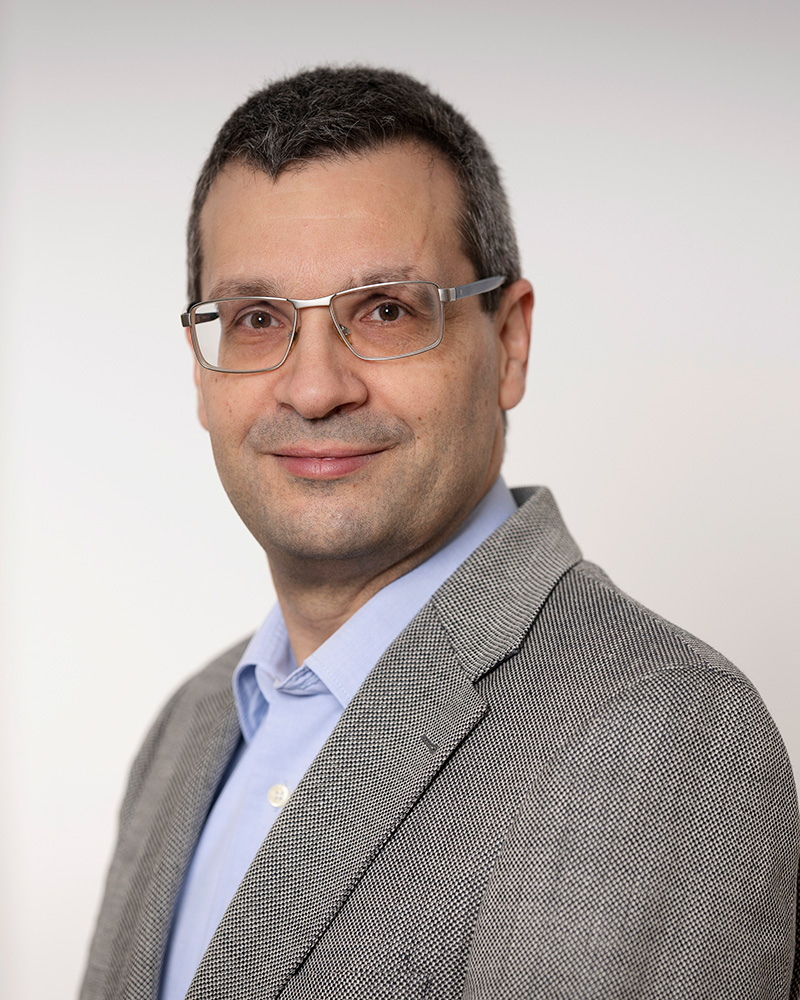
Prof. Dr. Hemmo Meyer is a Full Professor of Molecular Biology at the University of Duisburg-Essen, affiliated with the Centre for Medical Biotechnology (ZMB) and the Faculty of Biology. He serves as Principal Investigator in CRC 1093 and CRC 1430, and holds leadership roles such as speaker of CRC1430 and board member of ZMB.
Education: Hemmo Meyer earned his PhD in Cell Biology from Philipps-University Marburg (Germany) in 1997, following a Diploma (MSc) in Human Biology from the same institution. His postdoctoral training included studies with Graham Warren at Yale Medical School (USA) and the Imperial Cancer Research Fund (UK).
Research Interests: Meyer's work focuses on the AAA+ ATPase VCP/p97, exploring its roles in cellular stress responses, proteostasis, and disease mechanisms. His lab investigates how VCP/p97 coordinates ubiquitin-regulated processes like autophagy, lysophagy, and DNA damage repair, with implications for neurodegenerative disorders and cancer therapy. Key areas include lysosomal damage response (ELDR pathway), ubiquitin chain formation, and protein complex disassembly.
Publications Trends: Recent work highlights breakthroughs in understanding VCP/p97's structural and functional roles, including molecular tweezers targeting its pore, light-activatable ubiquitin studies, and mechanisms linking VCP/p97 to hypoxic signaling and lysosome integrity. His research bridges basic science with translational applications, addressing both disease pathogenesis and therapeutic strategies.
Grants & Advising: Leads funded projects from DFG consortia, EU programs (EFRE), and NRW initiatives. His lab collaborates with institutions like the International Max Planck Research School for Living Matter. No formal advisee/PhD student names are explicitly listed in the provided texts.
Labs & Teams: Directs the Meyer Group at ZMB, comprising scientists such as Dr. Johannes van den Boom, Dr. Bojana Kravic, and Dr. Pinki Gahlot. The group uses proteomics, biochemical reconstitution, and cell biological techniques to study VCP/p97 systems.