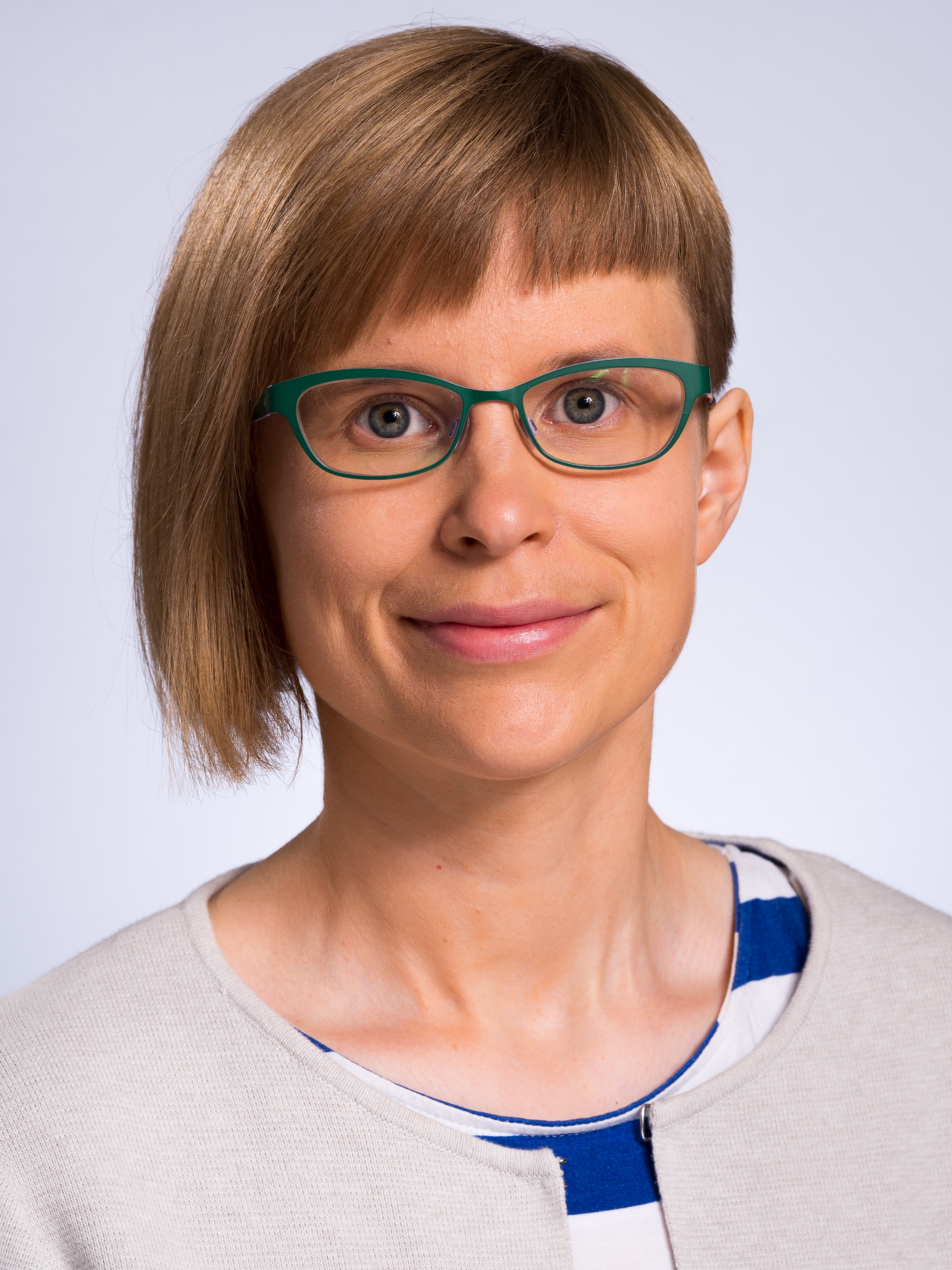
معرفی
Dr. Heli Hietala is a Lecturer in Space Plasma Physics and Royal Society University Research Fellow at Queen Mary University of London, affiliated with the School of Physical and Chemical Sciences. She is an active researcher in the Centre for Fundamental Physics and Centre for Experimental and Applied Physics, focusing on space plasma phenomena and contributing significantly to our understanding of space weather dynamics.
Dr. Hietala's research primarily centers on space plasma physics with specific expertise in:
- Magnetosheath jets and their formation mechanisms
- Collisionless shock physics throughout the solar system
- Interplanetary shocks and solar wind-magnetosphere interactions
- Space plasma turbulence and particle acceleration
- Observational space physics using multi-spacecraft missions
Analysis of Dr. Hietala's recent publications (2022-2025) reveals a strong focus on magnetosheath jets, collisionless shocks, and interplanetary phenomena. Her work combines observational data from missions like Solar Orbiter, Parker Solar Probe, and MMS with theoretical modeling to understand fundamental plasma processes. A notable trend is the increasing emphasis on multi-spacecraft observations to study three-dimensional structures in space plasmas, and the development of empirical models connecting solar wind parameters to magnetospheric phenomena.
Dr. Hietala has received significant recognition through:
- Royal Society University Research Fellowship
- Enhanced Research Expenses grant (2023)
- Enhancement award (2018)
Dr. Hietala currently supervises PhD student Rose Atkinson, who is researching "Quasi-Parallel Shocks Across The Solar System." Her research is supported by multiple grants from the Royal Society totaling over £700,000, demonstrating strong institutional support for her innovative work in space plasma physics.
As a member of the Centre for Fundamental Physics, Dr. Hietala collaborates with an interdisciplinary team of researchers studying fundamental physical processes. Her work connects observational space physics with theoretical plasma physics, contributing to both basic scientific understanding and practical space weather applications.