
معرفی
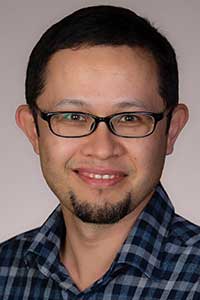
Hassan Hakimi is an Assistant Professor of Veterinary Parasitology in the Department of Diagnostic Medicine/Pathobiology at Kansas State University's College of Veterinary Medicine. His academic journey includes a DVM from University of Tehran, Iran, an MSc from Obihiro University of Agriculture and Veterinary Medicine in Japan, and a PhD from Gifu University United Graduate School of Veterinary Sciences, Japan, followed by post-doctoral trainings at Nagasaki University and Texas A&M University. He is also a Diplomate of the American College of Veterinary Microbiologists-Parasitology.
Dr. Hakimi's research focuses on the functional genomics of important protozoan parasites, particularly Babesia and Theileria (tick-borne pathogens), with special emphasis on the molecular mechanisms that underpin parasite survival within host erythrocytes. He has pioneered the development of genetic tools for Babesia parasites, including establishing a CRISPR/Cas9 system and adapting glmS riboswitch system for conditional gene knockdown. A second major research line focuses on Guinea worm (Dracunculus medinensis), aiming to understand immune responses to develop diagnostic tools for this neglected tropical disease.
His publication record shows consistent high-impact research output, with recent papers exploring ves1α genes in cytoadhesion, spherical body proteins in red blood cell modification, and genetic tools for parasite manipulation. The research spans molecular mechanisms, diagnostic development, and comparative genomics across various parasite species.
- Diplomate of American College of Veterinary Microbiologists-Parasitology
Dr. Hakimi serves as co-instructor for the Clinical Veterinary Parasitology course (DMP834) for second-year veterinary students. His work bridges basic molecular parasitology with practical veterinary applications, contributing significantly to our understanding of parasite biology and developing tools for disease control. His research has implications for both veterinary and human medicine, particularly in understanding host-pathogen interactions and developing interventions for parasitic diseases.

