معرفی
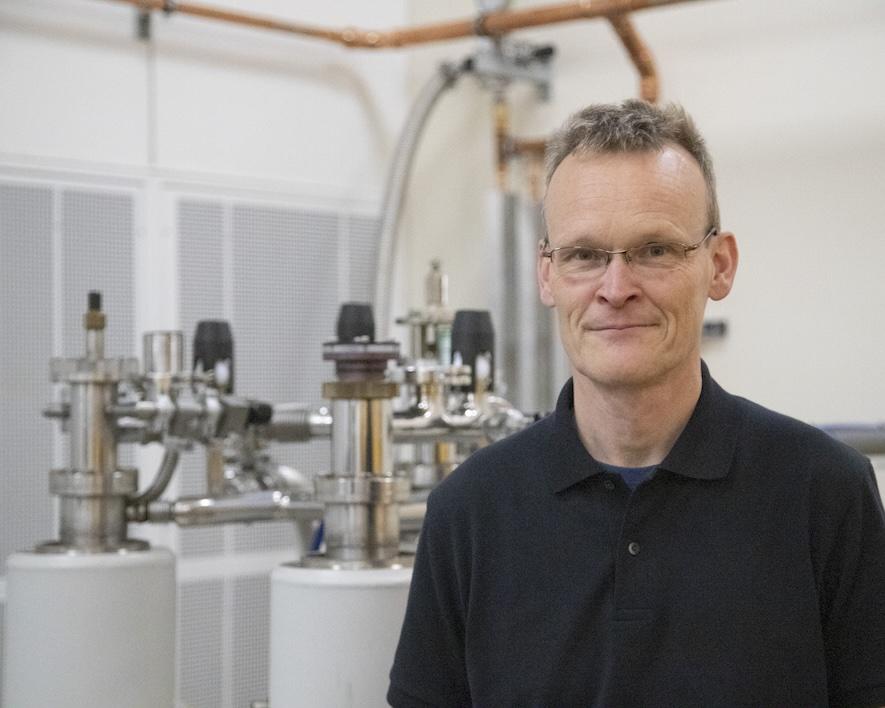
Hartmut Oschkinat is Professor and head of the Oschkinat Group at the Leibniz Research Institute for Molecular Pharmacology (FMP) in Berlin, Germany. His research focuses on developing solid-state magic-angle spinning (MAS) NMR methodology as a routine tool for biological studies, particularly for structural characterization of protein-protein interactions involved in signal reception and transduction.
His research interests center on structural biology with emphasis on NMR-supported techniques. The Oschkinat Lab specializes in the structural characterization of protein-protein interactions responsible for signal reception and transduction in biological systems. They investigate protein domains that recognize specific peptides, as well as membrane-integrated receptors and receptor-ligand complexes. The group has pioneered the use of solid-state NMR spectroscopy with magic-angle spinning (MAS) for high-resolution structural information of complex biological macromolecules. They have particularly focused on dynamic nuclear polarization (DNP) methods to enhance signal detection and have implemented very fast MAS rotation (100,000 rotations per second) for biological sample analysis.
Their recent publications reveal a strong focus on protein dynamics, membrane proteins, and liquid-liquid phase separation. Key research areas include protonation dynamics in proteins (particularly phytochromes and rhodopsin), structural analysis of protein complexes involved in signal transduction, and investigation of large dynamic and polydisperse protein systems involved in protein homeostasis. The group has made significant contributions to understanding small heat shock proteins, biological systems involved in phase separation, and biofilms.
The Oschkinat Group is actively involved in the SFB 1078 research consortium, investigating proton flows and proton dynamics to understand protein function. Their work on liquid-liquid phase separation using FUS protein as a model system aims to provide quantitative information about individual interactions responsible for establishing dense phases.
- Senior scientist: Anne Diehl
- Scientific imaging: Barth van Rossum
- Post-doctoral researcher: Morgane Adélaïde
- Technical assistant: Martina Leidert
- Secretary: Andrea Steuer