معرفی
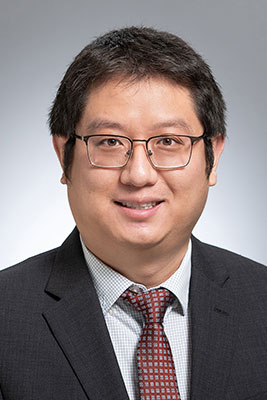
Dr. Haodong Qi is an Associate Professor and Project Researcher at Malmö University, Faculty of Culture and Society, Department of Global Political Studies. He is an economic demographer with specialized expertise in statistics, machine learning, and data science applications for social research.
Dr. Qi obtained his Ph.D. from Lund University in 2016 and is actively affiliated with the Malmö Institute for Migration Studies (MIM), contributing to this international research center's mission of developing knowledge on international migration and ethnic diversity. His academic profile bridges traditional demographic analysis with cutting-edge computational methods.
His primary research focus centers on climate-induced migration through leadership of the CLIMB (Climate-Induced Migration in Africa and Beyond) project, which leverages big data and machine learning to predict human mobility patterns. Recent publications demonstrate his innovative interdisciplinary approach spanning migration studies, public health, and data analytics, including work on using internet search data to predict migration intentions and analyzing refugee integration in Sweden.
Dr. Qi's research has secured significant international funding from multiple national research councils across Europe and North America through the Belmont Forum partnership, reflecting the global relevance of his work on climate-migration linkages.
- Climate-Induced Migration Prediction
- Big Data Analytics for Social Research
- Digital Footprints in Migration Studies
- Economic Demography Applications
- Refugee Integration Processes
- Machine Learning for Social Phenomena
His methodological innovation represents a frontier in migration studies, combining traditional demographic approaches with advanced computational techniques to address complex questions at the intersection of environmental change, human mobility, and social integration. The CLIMB project specifically exemplifies this approach by developing predictive models for one of the most pressing global challenges of our time.