معرفی
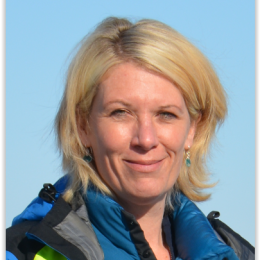
Gunhild Rosqvist is a Professor of Geography with a specialization in Physical Geography at Stockholm University, where she is affiliated with the Department of Physical Geography within the Faculty of Science. Her research focuses on climate change impacts in alpine and polar environments, with particular emphasis on snow, glaciers, and water systems. She has extensive experience in interdisciplinary research, working with climate modelers, environmental and indigenous law experts, and Sami reindeer herders to address the complex challenges facing Arctic communities.
Dr. Rosqvist previously served as director of the Tarfala Research Station in Kebnekaise from 2005 to 2020, during which time she helped develop the station into a national and international research infrastructure supported by the Swedish Research Council and the EU through SITES and INTERACT programs. She currently leads several significant research initiatives, including Sweden's Antarctic research program iQ2300, which aims to quantify Antarctica's contribution to future sea level rise along the Swedish coast and globally.
Her research interests span multiple interconnected domains within climate science and environmental geography. She investigates how rapid climate change and land use alterations affect mountain ecosystems and create new challenges for traditional livelihoods like reindeer herding. Her work integrates physical science with social dimensions, emphasizing the need for climate impact assessments that incorporate indigenous knowledge. She also studies glacial dynamics, snow properties, and lake ecosystems in Arctic environments, using both field measurements and advanced modeling approaches to understand past, present, and future environmental changes.
Dr. Rosqvist's publication record demonstrates a consistent focus on Arctic and alpine environments, with particular attention to climate change impacts, glaciology, and human dimensions of environmental change. Her recent work shows increasing integration of indigenous knowledge with scientific methods, especially regarding reindeer herding in northern Sweden. She has made significant contributions to understanding snow dynamics through innovative remote sensing techniques and has pioneered research on microbial processes for remediating mine pollution in Arctic environments. Her interdisciplinary approach bridges physical geography with social sciences, creating pathways for more holistic environmental assessments.
As a research leader, Dr. Rosqvist directs multiple ongoing projects funded by Formas, the National Heritage Board, Vinnova, and international collaborations. These include initiatives on sustainable land use planning in Arctic Sweden, climate impact assessments for reindeer herding areas, methods for cultural environment monitoring, and snow quality assessment tools that integrate Sámi knowledge. She previously led the Nordic Center of Excellence REXSAC (Resources Extraction and Sustainable Arctic Communities) through NordForsk and contributed to the Bolin Center for Climate Research at Stockholm University.
Dr. Rosqvist works closely with the Tarfala Research Station in Kebnekaise, which serves as a critical field site for Arctic and alpine research. She collaborates extensively with researchers from Stockholm and Helsinki Universities through the Arctic Avenue initiative, focusing on lake ecosystems and glacial activity. Her research teams include climate scientists, geographers, environmental lawyers, and indigenous knowledge holders, creating truly interdisciplinary approaches to understanding and addressing climate challenges in the Arctic.