معرفی
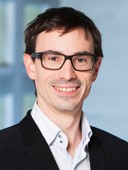
Guillaume Habert is a Full Professor at ETH Zürich, holding the Chair of Sustainable Construction within the Department of Civil, Environmental and Geomatic Engineering. He serves as Head of the Institute of Construction and Infrastructure Management, where his research focuses on sustainable building practices and materials innovation. His work bridges academic research with practical applications in the construction industry, contributing significantly to the development of environmentally friendly building solutions.
Dr. Habert completed his education with a degree in earth, atmospheric and oceanic studies from the Ecole Normale Supérieure in Paris (1999), followed by a PhD in structural geology from Toulouse (2004). His academic journey includes research positions at the Federal University of Paraiba in Brazil and the Laboratoire Central des Ponts et Chaussées in Paris before joining ETH Zürich in 2012.
Habert's research interests center on Life Cycle Assessment, Alternative materials development, and Material and economic flow analysis in construction. His work explores sustainable concrete alternatives, earth-based construction methods, and circular economy applications in the built environment. His laboratory investigates innovative materials like geopolymers, clay-based binders, and recycled construction waste, with emphasis on both technical performance and environmental impact reduction.
His publication record demonstrates consistent focus on sustainable construction materials and methods, with recent work examining earth-concrete mixes, mineral wool waste recycling, and life-cycle greenhouse gas emissions in building stocks. His research shows strong interdisciplinary connections between material science, environmental engineering, and construction management.
- 2015 RILEM Robert l'Hermite Medal
Professor Habert has contributed to developing software tools for implementing sustainability into design practices and co-founded a startup focused on earth construction. His teaching portfolio includes courses on sustainable development in the built environment, life cycle assessment, and advanced knowledge on structural and hygrothermal building physics. His research has received funding from various sources including ETH grants and European Commission projects, demonstrating the practical relevance and impact of his work in advancing sustainable construction practices globally.