معرفی
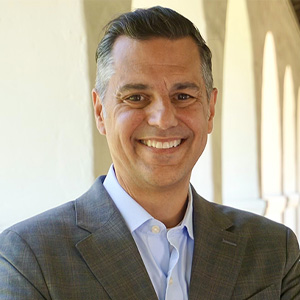
Gregory A. Daddis is Professor of History and holds the USS Midway Chair in Modern U.S. Military History at San Diego State University (SDSU), where he also serves as Director of the Center for War and Society. He is a leading scholar in Cold War and Vietnam War history, with a strong focus on military strategy, historical memory, and public engagement with war.
His educational background includes a Ph.D. in History from the University of North Carolina at Chapel Hill (2009), an M.A. from Villanova University (1998), and a B.S. in International Relations from the United States Military Academy at West Point (1989).
Daddis’s research centers on the American war in Vietnam, examining themes such as military strategy, the use of metrics in war, and the cultural representation of conflict. His work bridges academic scholarship and public history, with significant contributions to journals like The Journal of Cold War Studies, The Journal of Military History, and The Journal of Strategic Studies. He has authored a trilogy on Vietnam with Oxford University Press and a recent book on men’s adventure magazines and Cold War masculinity.
His publications reflect a consistent focus on reassessing established narratives of U.S. military effectiveness and strategy, particularly during the Vietnam War. He frequently explores how war is remembered, represented, and interpreted in both official and popular contexts.
Scientific awards and honors include:
- Fulbright Distinguished Scholar Award (2022–2023), Pembroke College, University of Oxford
- Bronze Star
- Legion of Merit
- Meritorious Service Medal
Daddis has served in significant advisory and leadership roles, including as Command Historian for U.S. Multi-National Corps-Iraq in Baghdad, advisor to the Ken Burns-Lynn Novick documentary The Vietnam War, and board member for the Society for Military History and the Quincy Institute for Responsible Statecraft. He has reviewed grants for the National Endowment for the Humanities and contributed op-eds to major publications such as the New York Times, Washington Post, and National Interest.
He has led educational tours to Vietnam and continues to direct research initiatives through the Center for War and Society, fostering interdisciplinary scholarship on war, memory, and society.