معرفی
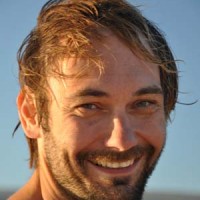
Greg Torda is a Senior Research Fellow (DECRA) at James Cook University, associated with the ARC Centre of Excellence for Coral Reef Studies which was headquartered at JCU from 2005 to 2022. His research focuses on coral reef ecosystems and their response to environmental changes, particularly in the context of global climate change.
Dr. Torda completed his MSc degree in Zoology at Szent Istvan University in Budapest in 2000, followed by a postgraduate research program in marine ecology at the University of Las Palmas de Gran Canaria, Spain (2002-2004). He earned his PhD on ecological connectivity in corals at the Australian Institute of Marine Science and James Cook University, where he employed genetic tools to characterize evolutionary and contemporary connectivity patterns in corals.
His research interests center around adaptation and acclimatization in reef-building corals to rapid environmental changes. Dr. Torda combines genetic, ecological, and evolutionary modeling approaches to understand the ecological, physiological, and genetic bases of coral resilience to stressors, with the goal of predicting coral futures in the Anthropocene. His work spans coral microbiome dynamics, thermal tolerance mechanisms, and the impacts of climate change on coral recruitment and population dynamics.
His publication record demonstrates extensive work on coral bleaching, climate change impacts on coral reefs, and coral resilience mechanisms. His research has appeared in high-impact journals including Nature, Nature Climate Change, and Science, often as part of large collaborative efforts examining global coral reef responses to climate change.
- DECRA (Discovery Early Career Researcher Award)
Dr. Torda has supervised several graduate students including PhD candidate Elliott Schmidt and Master's graduates Hannah Epstein, Katie Sambrook, Georgina Torras Jorda, Virgina Krone, and Peter Cross. His research has been prominently featured in media releases, including the 2022 story "DNA reveals the past and future of coral reefs" which highlighted new DNA techniques for understanding coral responses to climate change.