معرفی
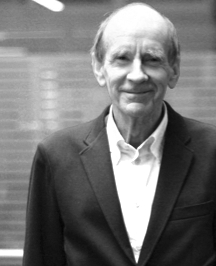
Gordon Douglas is an Associate Professor at the School of Planning, Policy, and Environmental Studies within San Jose State University's College of Social Sciences. His research critically examines the intersection of urban space, culture, and identity in the San Francisco Bay Area, with particular focus on architectures of exclusion, community resilience, and spatial manifestations of inequality.
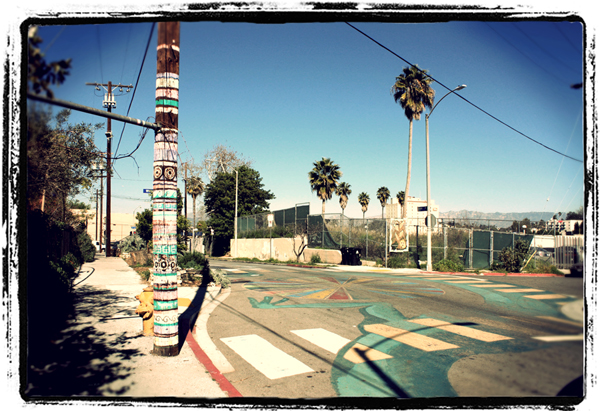
Douglas employs ethnographic and photographic methodologies to investigate diverse urban landscapes—from tech campuses and tent encampments to Indigenous land rematriation projects and Afrofuturist architectural imaginaries. His current multi-year Bay Area study explores concepts of inside/outside, space/place, and core/periphery, culminating in the forthcoming book insideOutside: Architectures of Exclusion and Places of Hope in the Bay Area. This work builds upon his first book The Help-Yourself City, which analyzed unauthorized civic improvements like guerrilla gardens and hand-painted bike lanes. His research directly engages with urgent contemporary issues including pandemic urbanism, homelessness, gentrification, and the spatial impacts of the tech industry.
Douglas's publication trends reveal deep engagement with placemaking politics, urban commons, and spatial justice, often bridging theoretical urban studies with practical applications through graphical and narrative approaches. His work demonstrates consistent methodological innovation—from mixed-methods assessments of Oakland Slow Streets to ethnographic studies of handmade pandemic signage—with strong emphasis on visual documentation and community-centered solutions.
As an educator and researcher, Douglas maintains active collaborations with municipal partners including Oakland's Department of Transportation and mentors graduate students on projects such as Silicon Valley mobile home studies. His scholarship emphasizes the vital connection between academic work and real-world urban challenges, particularly through his teaching of courses on Covid urbanism and his commitment to producing accessible, graphically rich scholarship that serves communities, scholars, and placemakers.