معرفی
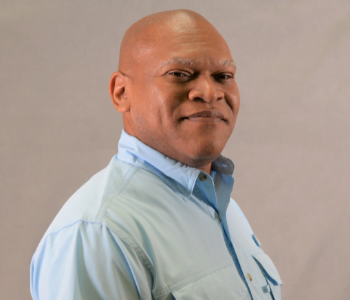
Dr. Godson C. Nwokogu is a Professor in the Department of Chemistry and Biochemistry at Hampton University, School of Science. His research focuses on organic synthesis and molecular design, particularly in the development of novel monomers and functionalized polymers. He is based in Turner Hall 232 and can be reached at 757-727-5396 or via email at godson.nwokogu@hamptonu.edu.
His research interests span Organic Chemistry, Synthesis Design, Polymer Chemistry, Medicinal Chemistry, and Catalysis. He has contributed significantly to the design of ethynyl-functionalized monomers for high-performance thermoplastics and cross-linkable polymers, as well as exploring palladium-catalyzed reactions for chemoselective transformations.
The body of his published work from the 1980s to early 1990s reflects a strong emphasis on synthetic organic chemistry with applications in materials science and medicinal compounds. Key themes include the synthesis of triarylethanes, polyarylene ethers, polyimides with reactive pendant groups, and anticonvulsant heterocycles. His publications appear in high-impact journals such as The Journal of Organic Chemistry, Journal of Medicinal Chemistry, and Polymer.
Dr. Nwokogu has presented his research at national and regional conferences including the ACS National Meetings, the Virginia Academy of Science, and the National Organization of Black Chemists and Chemical Engineers. Notable presentations include work on ethynylated azaspirocyclic intermediates and phenoxy analogs of triarylethanes.
While no scientific awards or fellowships are mentioned in the provided text, his sustained publication record and conference contributions highlight his active engagement in the chemical sciences community.
He has advised or collaborated on projects involving graduate students and researchers, though specific names of advisees are not listed. There is no mention of external grants or funding sources in the available information.
Although details about specific laboratories or research teams are absent, his work suggests a focus on synthetic organic chemistry laboratory research, likely involving student researchers in the design and execution of complex organic syntheses.