معرفی
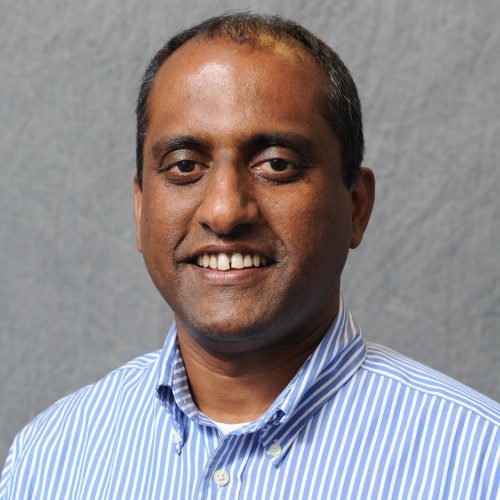
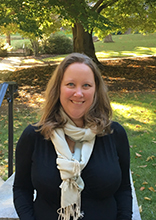
Giuseppe Mascaro is an Associate Professor in the School of Sustainable Engineering and the Built Environment at Arizona State University. His extensive affiliations include the Sustainability Initiative, Civil and Environmental Engineering department, Knowledge Enterprise, Ira A. Fulton Schools of Engineering, Infrastructure and Sustainable Engineering (Metis Center), Global Futures Laboratory, Center for Hydrologic Innovations, and Urban Climate Research Center.
Dr. Mascaro earned a "Laurea" (Bachelor's and Master's of Science) in Civil Engineering in 2001 (summa cum laude) and a doctorate in Hydrology in 2008 from the University of Cagliari, Italy.
His research focuses on stochastic hydrology, watershed modeling, hydroclimatology, climate change, infrastructure modeling, and the food-water-energy nexus. Dr. Mascaro pursues an interdisciplinary approach through collaborations with faculty at ASU and other institutions. His work emphasizes statistical characterization of hydrologic variables, development of downscaling methods, watershed modeling, evaluation of climate change impacts on water resources and infrastructure, and food-water-energy nexus analysis.
Dr. Mascaro's recent publications reveal a strong focus on precipitation trends, food-energy-water systems, flood frequency analysis, and climate change impacts on watersheds. His research spans both theoretical hydrological modeling and practical applications for infrastructure resilience.
- Visiting Professor at New York University (2024)
- Visiting Professor at University of Cagliari, Italy (2023)
- Associate Editor for Hydrological Sciences Journal
Dr. Mascaro actively mentors students through research courses and dissertation supervision. He leads multiple significant research projects funded by the Department of Defense, National Science Foundation, and Arizona Board of Regents, with a focus on climate resilience, water resource management, and flood analysis. His research group, the Hydroclimate Lab, investigates topics in hydrology, climate, and atmospheric sciences to support engineering applications.