معرفی
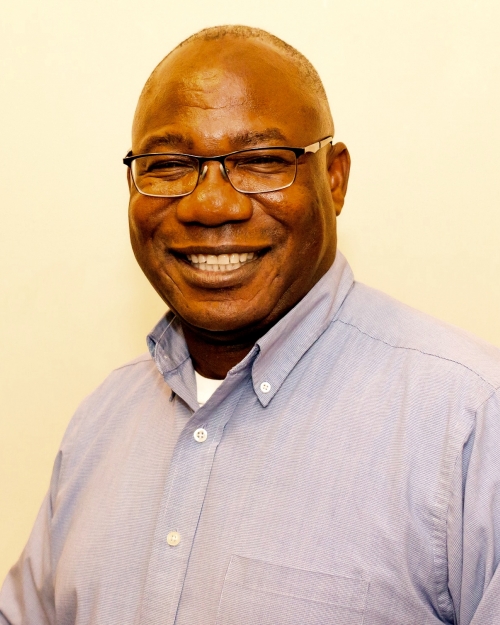
Dr. Gilbert Kalonde serves as Associate Professor and Program Leader for Curriculum and Instruction within the Department of Education, College of Education, Health & Human Development at Montana State University. He maintains a dual affiliation with the Montana Engineering Education Research Center, focusing his expertise on technology integration across educational contexts. His office is located in Reid Hall 138B, and he can be contacted at kalonde@montana.edu.
His educational background includes:
- Ph.D. in Curriculum and Instruction from Southern Illinois University (2014)
- M.S. in Education from Southern Illinois University (2010)
- B.S. in Liberal Arts from Excelsior College (2008)
- A.A. in Liberal Arts from Los Angeles Southwest College (1995)
Dr. Kalonde's research centers on practical technology implementation in K-12 and teacher education settings, with special emphasis on rural and inclusive classrooms. He investigates how engineering design concepts and computer science can transform math education while addressing systemic barriers like those exposed during the pandemic. His work consistently bridges theoretical frameworks such as the SMAR model and ADDIE with real-world classroom applications.
Analysis of his 10 publications (2020-2024) reveals three dominant trends: 1) Rural technology integration challenges and solutions, 2) AI and computer science applications in special/general education, and 3) Decolonizing STEM curricula with focus on Sub-Saharan Africa. His work appears primarily in SITE conferences and educational technology journals, demonstrating strong methodological diversity from case studies to literature reviews.
His scholarly recognition includes:
- Outstanding Paper Award (2018) from Society for Information Technology and Teacher Education (SITE)
As Program Leader, Dr. Kalonde advises graduate students in curriculum development while maintaining active service roles including past Board Membership with ACLU Montana (2016-2022) and Science Olympiad leadership. His teaching portfolio spans foundational technology integration methods to advanced curriculum construction, with courses scheduled through 2025.
Through the Montana Engineering Education Research Center, he contributes to interdisciplinary projects connecting engineering principles with K-12 pedagogy, particularly focusing on making STEM accessible in rural communities through contextually relevant technology solutions.