معرفی
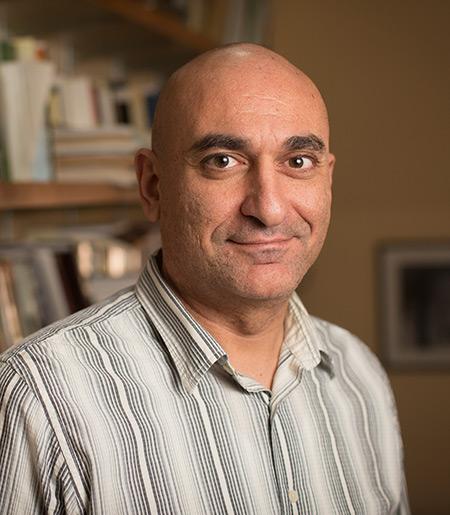
Gert Huskens is a Postdoctoral Researcher at Utrecht University's Faculty of Humanities, Department of History and Art History, currently affiliated with the ERC Consolidator Grant project 'Fighting Pandemics from Below: Global North-South Public Health Cooperation in the Middle East and North Africa, 1792-1942 [COOPERATION]'. His research examines small states like Belgium and the Netherlands within international sanitary councils across Constantinople, Alexandria, Tanger, Tunis, and Teheran.
He completed his PhD in 2023 through a joint program at Université libre de Bruxelles and Ghent University. His doctoral thesis, 'The Lion and the Sphinx. An entangled history of Belgian diplomacy in Egypt, 1830-1914', established his expertise in nineteenth-century diplomatic entanglements between European and Middle Eastern states.
Huskens specializes in History of International Relations and New Diplomatic History with deep focus on Middle East Political History and 19th/20th Century European History. His methodological approach integrates Social Network Analysis to investigate Western travelers to the Eastern Mediterranean, social history of Egypt's Mixed Courts, and integration of indigenous actors in foreign diplomatic services. His work consistently reveals how urban Levantine elites navigated colonial power structures in late-nineteenth century Egypt.
His 2020-2023 publications demonstrate a cohesive trajectory examining Belgian-Egyptian diplomatic networks through consular representation, para-diplomatic personnel, and cultural exchange. The articles collectively establish entangled history as a vital framework for understanding how small European states operated within Ottoman and post-Ottoman contexts, particularly through non-state actors and informal diplomatic channels.
Currently funded by the ERC Consolidator Grant, Huskens previously contributed to the Ghent Centre of Digital Humanities by co-developing a relational database on Egyptian elites. No formal advisees are documented in available records.
He actively participates in the New Diplomatic History Network and Security History Network, where he collaborates on transnational research projects analyzing diplomatic practices beyond traditional state-centric frameworks. His digital humanities work with the Ghent Centre demonstrates innovative approaches to mapping historical elite networks in colonial contexts.