معرفی
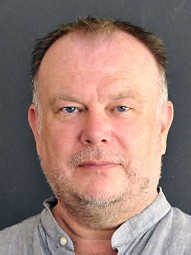
Gergely László Rosta is a Lecturer and researcher at the Department of Sociology of Religion at the University of Münster (WWU). His academic career includes roles at Pázmány Péter Catholic University in Hungary before joining WWU in 2009. He holds a PhD in Sociology from Corvinus University Budapest (2005), focusing on secularization and political attitudes in Western Europe.
Education:
- PhD in Sociology, Corvinus University Budapest (2005)
- University Diploma in Sociology and Business, Budapest University of Economics (1996)
- Secondary Education (Abitur), Berzsenyi Dániel Gymnasium, Budapest (1991)
Research Interests:
Rosta specializes in the intersection of religion and political attitudes, quantitative research methods, and youth sociology. His work explores secularization trends, religious pluralism, and cultural shifts in Europe, with a focus on Central and Eastern Europe. He has contributed to projects like the DFG-funded 'Legitimacy of Religious Pluralism' and 'Church and Religion in an Enlarged Europe.'
Publications Overview:
His research spans books (e.g., Religion and Modernity: An International Comparison), edited volumes on religious tolerance, and articles analyzing youth religiosity, secularization debates, and comparative religious-political dynamics. Methodologically, he emphasizes empirical studies and survey techniques.
Awards and Memberships:
- Recipient of the Karl-Polányi-Preis (2018) from the Hungarian Sociological Society
- Editor-in-Chief of Religion and Society in Central and Eastern Europe
- Active in international associations like the Association for the Sociology of Religion (ASR) and the International Sociological Association (ISA)
Teaching and Grants:
Rosta teaches courses on statistics, research methods, and religious change. His grants include DFG-funded projects on religious pluralism and integration of Muslim communities in Germany. He advises students on empirical thesis projects and collaborates with Detlef Pollack on methodological seminars.
Labs/Teams:
Affiliated with the WWU’s interdisciplinary research groups on religion and society, contributing to projects like the Cluster of Excellence on Religious Pluralism.