معرفی
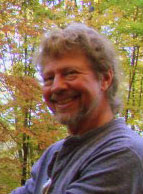
George Hooks serves as Professor of Anatomy and Physiology at Florida SouthWestern State College's School of Pure and Applied Sciences since 2010, teaching Anatomy and Physiology I & II and Introductory Geology. Previously, he was Assistant/Associate Professor of Biology at Longwood University (2003-2010) and Curator of Vertebrate Paleontology at the Alabama Museum of Natural History (1999-2003), where he managed field expeditions and the Harrell Station Paleontology Preserve.
His academic credentials include:
- Ph.D. in Biology, The University of Alabama (1998)
- M.S. Zoology, Auburn University (1995)
- B.S. Pre-veterinary Medicine (Zoology Major), 1991
Dr. Hooks' research integrates paleontology, anatomy, and geology to investigate marine reptile evolution, specializing in Cretaceous turtle systematics. His work employs cladistic analysis and fossil morphology to reconstruct phylogenetic relationships, with significant contributions to understanding protostegid turtles and shark-turtle predation dynamics. This interdisciplinary approach bridges vertebrate paleontology and functional anatomy.
His publication record (1994-2009) reveals a cohesive research trajectory focused on Alabama's Cretaceous marine ecosystems, particularly Mooreville Chalk formations. Over 75% of his work centers on turtle systematics, with recurring themes of taxonomic revision, fossil preservation, and predator-prey interactions. The consistent regional focus establishes him as a leading authority on southeastern US marine reptiles.
His scientific recognition includes:
- Invited presentations at five international symposia
- Romer Prize candidacy (1994)
- Technical contributions to BBC's Sea Monsters program
As an educator, he has advised undergraduate students and served on graduate committees, notably mentoring Jason Schein's thesis at Auburn University. His commitment extends to public outreach through publications promoting amateur paleontology and museum exhibit collaborations.
During his museum tenure, he directed multi-institutional field expeditions and managed the Harrell Station Paleontology Preserve, creating research opportunities for students while fostering community engagement with paleontological resources.