معرفی
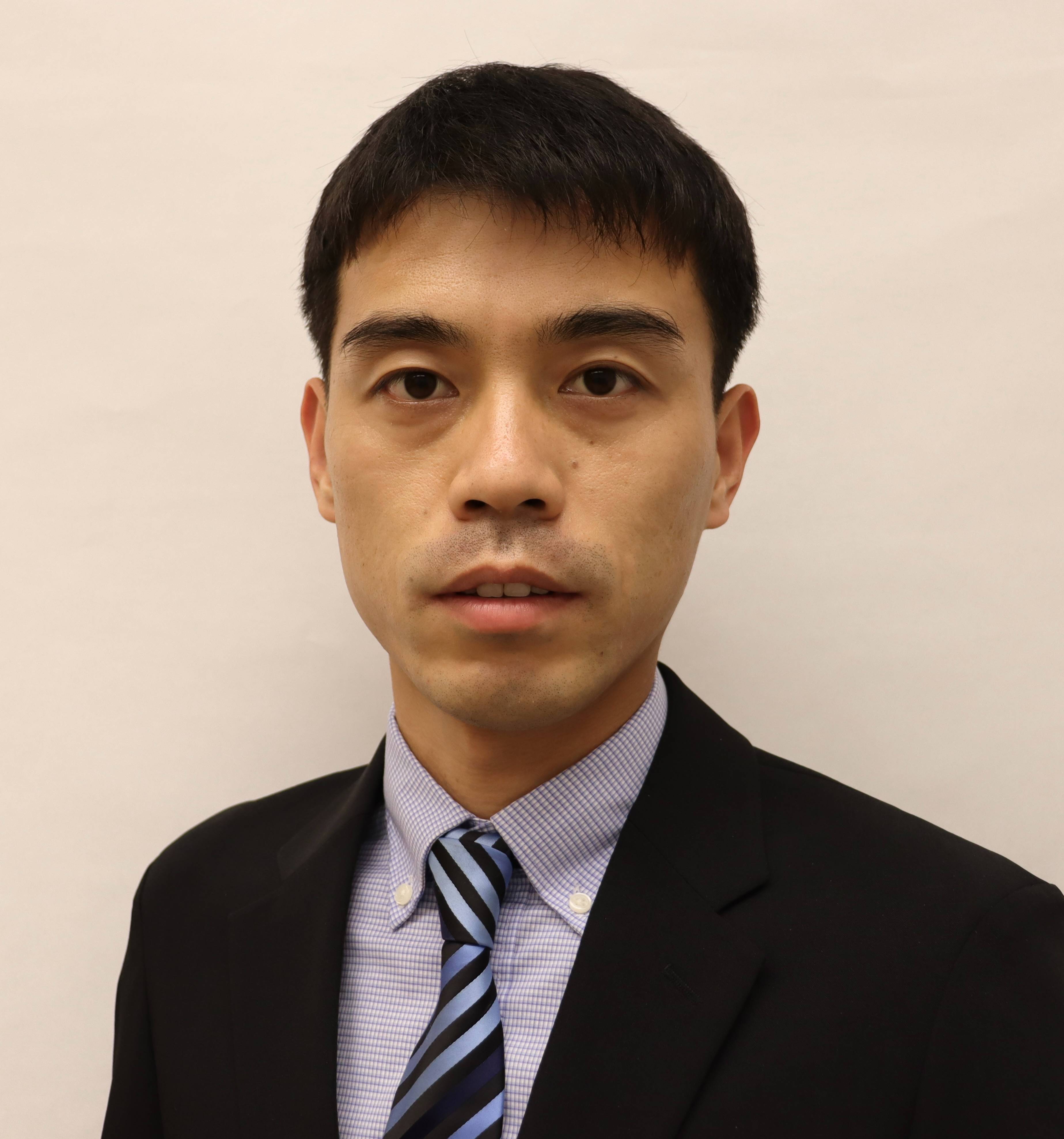
George A. Kantor is a Research Professor and Associate Director of Education at Carnegie Mellon University's Robotics Institute, based in the Collaborative Innovation Center (LL050). He leads the Kantor Lab and the AIIRA (AI Institute for Resilient Agriculture), focusing on controlling robotic systems with complex dynamics and state estimation through indirect measurements for applications in agriculture, underwater environments, and mining.
His research spans agricultural robotics, field robotics, and control theory, emphasizing dynamics, kinematics, motion planning, and sensing/perception. Key areas include Robotics in Agriculture and Forestry, Underwater Robotics, Mining Robotics, and Sensing & Perception. He combines mathematical modeling with experimental validation to develop real-world solutions for balancing unstable robots and localizing autonomous vehicles in complex environments.
Recent publications (2023-2025) reveal a dominant focus on agricultural robotics, featuring computer vision for crop monitoring, autonomous harvesting, and environmental sensing. Trends include transformer networks for fruit tracking, sim2real transfer techniques using Gaussian splatting, audio-visual contact classification, and LiDAR-based navigation in crop fields, demonstrating strong integration of deep learning with agricultural automation.
No scientific awards were listed in the available information.
Dr. Kantor actively mentors 4 current PhD students (Dominic Guri, John Kim, Mark Lee, Jenny Wang) and 2 master's students (Morgan Mayborne, Mohammad Nomaan Qureshi), with a track record of guiding 1 PhD graduate and over 20 master's graduates. His advising emphasizes agricultural robotics applications, reflected in student projects on robotic pruning, sensor calibration, and autonomous harvesting systems.
He directs the Kantor Lab and contributes to AIIRA, developing systems like Bumblebee (autonomous vine pruning), Hefty (modular agricultural robot), and T-REX (vision-based leaf detection). Current work focuses on robotic manipulation in unstructured agricultural environments, sensor exchange for crop monitoring, and AI-driven solutions for resilient food systems.