معرفی
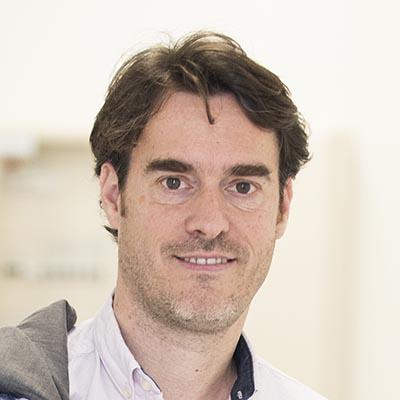
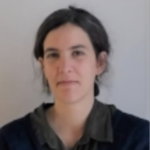
Gaëlle Letort is a Researcher at Institut Pasteur working within the Developmental and Stem Cell Biology department and collaborating with the Image Analysis Hub. With expertise spanning applied mathematics, computer science, and biological imaging, she develops computational tools that bridge theoretical modeling with experimental biology to address complex questions in developmental systems.
Her educational background includes:
- Graduation from ENSIMAG (École Nationale Supérieure d'Informatique et de Mathématiques Appliquées de Grenoble), specializing in applied mathematics and computer science engineering
- PhD research on numerical simulations of cytoskeleton auto-organisation conducted at CEA of Grenoble
Dr. Letort specializes in creating image analysis pipelines and mathematical models that transform raw biological data into meaningful insights. Her work focuses on developing interpretable computational frameworks that maintain scientific transparency while addressing specific biological questions, particularly in developmental and reproductive biology.
Her research methodology integrates machine learning with physical modeling to create tools that capture both the quantitative and qualitative aspects of biological systems. This approach enables researchers to analyze complex cellular behaviors that would be difficult to observe through experimental methods alone.
Analysis of Dr. Letort's publication history reveals a consistent trajectory of developing innovative computational tools for biological discovery. Her work spans multiple domains including developmental biology, cancer research, and reproductive systems, with particular emphasis on creating accessible software frameworks like PhysiBoSS and Oocytor that have gained recognition in the systems biology community.
Through her role in the Image Analysis Hub, Dr. Letort provides critical support to researchers across Institut Pasteur, developing customized analysis solutions and contributing to institutional infrastructure for bioimage analysis. Her collaborative approach has established her as a key resource for researchers requiring advanced computational methods to analyze complex biological imaging data.