معرفی
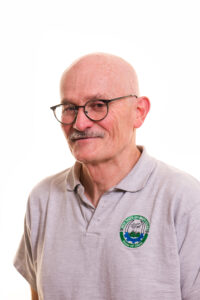
Gaston Giuliani serves as a Research Director at the Institut de Recherche pour le Développement (IRD) within Unit UR 154 (LMTG), based at the Centre de Recherches Pétrographiques et Géochimiques (CRPG), a CNRS-University of Lorraine joint research unit (UMR 7358) in Vandœuvre-lès-Nancy, France. His contact details include email gaston.giuliani@univ-lorraine.fr, phone +33(0)3 83 59 42 38, and office 307. As an active researcher, he leads studies on deep magmas and fluids (theme: Magmas et fluides profonds) with a 40+ year publication history.
His research concentrates on the geological genesis of high-value gemstones, particularly emeralds and rubies. Key methodologies include fluid inclusion analysis and oxygen isotope geochemistry to trace gem origins. He investigates deposits in Colombia, Madagascar, Vietnam, Pakistan, Myanmar, Tanzania, and Kenya, focusing on evaporite roles in marble-hosted systems, trapiche textures, and deposit classification. His work bridges mineralogy, economic geology, and geochemistry to decode formation conditions and geographic provenance.
Recent publications (2019-2022) reveal consistent themes: detailed classification of emerald deposits worldwide, the significance of evaporites in ruby formation, and advanced techniques like X-ray tomography for fluid inclusion studies. Collaborations span Canadian, Australian, Vietnamese, and European institutions, with emphasis on isotopic signatures (O, B) and trace element chemistry. His contributions include defining genetic models for deposits such as Mong Hsu rubies and Colombian emeralds.
Scientific Awards
- No scientific awards or fellowships were mentioned in the provided text.
Advising and Grants
- PhD/Master's students: None listed in the text.
- Grant funding: Not specified in the source material.
Laboratories and Teams
- Primary affiliation: CRPG (UMR 7358 CNRS-University of Lorraine), where he conducts research on deep magmas and fluids.
- Global collaborations: Teams across Canada (University of British Columbia), Australia, Vietnam, and Tanzania for field studies and lab analyses.
- Methodology focus: Combines stable isotope analysis (oxygen, boron), fluid inclusion microscopy, and mineralogical characterization.