معرفی
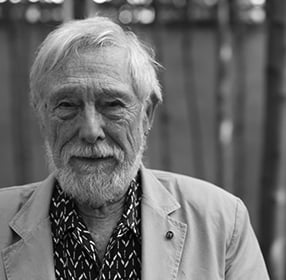
Gary Snyder (born May 8, 1930) is a professor of English at the University of California, Davis. A central figure in the Beat Generation, Ethnopoetics movement, and San Francisco Renaissance, Snyder is renowned for his poetry and prose that integrate environmental activism, Zen Buddhism, and indigenous cultural perspectives. His landmark works include the Pulitzer Prize-winning 'Turtle Island' and the philosophical essay collection 'The Practice of the Wild', establishing him as a foundational voice in ecological literature.
Snyder's creative and intellectual work centers on poetry as a vehicle for environmental consciousness and cultural renewal. His primary research domains encompass environmental literature, ethnopoetics (examining poetry's relationship to oral traditions), and cross-cultural translation, particularly of Asian texts. His writings consistently explore wilderness ethics, sustainability, and the philosophical implications of humanity's relationship with the natural world, reflecting decades of engagement with ecological thought and spiritual practice.
Throughout his seven-decade career, Snyder's publications reveal a progressive deepening of ecological consciousness—from early Beat-influenced works like 'Myths & Texts' (1960) to mature meditations in 'Mountains and Rivers Without End' (1997) and 'Danger on Peaks' (2005). His poetry consistently demonstrates precise natural observation, Zen-inspired clarity, and urgent environmental advocacy, evolving from countercultural expressions to foundational texts in ecopoetics and environmental philosophy.
Snyder's accolades include the highest honors in American letters:
- Pulitzer Prize for Poetry (1975) for 'Turtle Island'
- Wallace Stevens Award (2012) for lifetime achievement
- Bollingen Prize in Poetry
- Ruth Lilly Poetry Prize
- Shelley Memorial Award
- American Book Award for 'Axe Handles' (1983)
- Robert Kirsch Lifetime Achievement Award
- Guggenheim Fellowship
- American Academy of Arts and Letters award
No information regarding graduate student mentorship or research grants appears in the source material, though his influence through literary movements and ecological advocacy remains profound. Snyder's work continues to shape environmental thought through poetic practice rather than institutional academic structures, with no dedicated laboratories or research teams documented in the provided texts.