معرفی
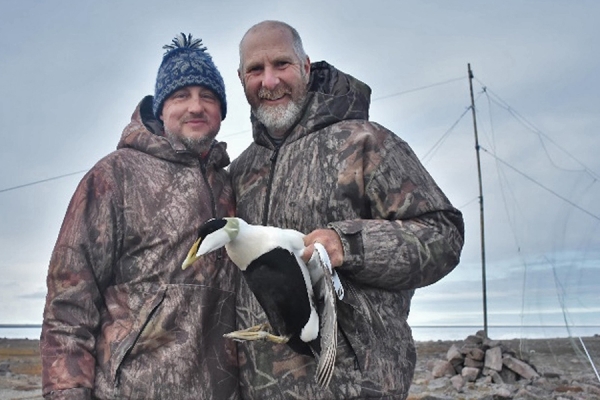
Gary Burness is a Professor in the Biology Department at Trent University where he teaches undergraduate courses including Foundations in Cell and Molecular Biology, Animal Physiology I, and Animal Physiology II. He leads the Burness Lab which focuses on interdisciplinary research at the intersection of physiology, ecology and evolution.
Education:
- B.Sc. from Memorial University
- M.Sc. from Brock University
- Ph.D. from University of British Columbia
Dr. Burness's research examines how energetic trade-offs influence reproductive fitness with particular focus on the links among metabolic rate, life-history strategy, and environmental stress response. His work combines field and laboratory approaches to investigate physiological adaptations in birds, mammals and fish facing environmental challenges. The Burness Lab provides critical data on organismal performance limits and phenotypic plasticity mechanisms that enable population persistence amid rapid environmental change.
Analysis of Dr. Burness's recent publication record (2021-2025) reveals consistent investigation of thermal physiology, stress responses, and metabolic trade-offs across diverse taxa. His work spans avian species (passerines, seabirds), fish (particularly salmonids), and mammals, with growing emphasis on anthropogenic stressors including climate change and light pollution. The research demonstrates sophisticated integration of molecular, physiological, and ecological approaches to address conservation-relevant questions.
Dr. Burness actively mentors students at all levels as evidenced by recent successes including Dr. Taylor Brown's PhD defense on light attraction in seabirds (May 2025), Anna Lane's NSERC-Undergraduate Student Research Award for tree swallow research (April 2025), and Michael Campbell's publication following his MSc work on zebra finches. He welcomes inquiries from prospective students with backgrounds in physiology, molecular biology, ecology and evolutionary biology who seek to develop research projects within the animal energetics framework.
The Burness Lab operates on the principle that understanding physiological limits is crucial for effective conservation strategies. Current research explores how animals interact with changing environments, with particular attention to stress physiology and energetic constraints that ultimately determine fitness outcomes in natural populations facing unprecedented environmental change.