معرفی
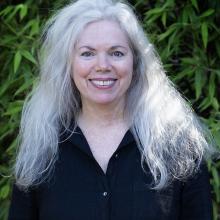
Gail Wight is a Professor in the Art Practice program at Stanford University, where she has taught since 2003 with a focus on Experimental Media. She holds an MFA in New Genres from the San Francisco Art Institute (1994), where she was a Javits Fellow, and a BFA from the Studio for Interrelated Media at Massachusetts College of Art (1988).
Wight's research spans the intersection of art and science, with particular interests in:
- Art & Science collaborations and explorations
- Contemporary digital and electronic art forms
- Experimental media techniques and installations
- Photography, printmaking, and video art
Her artistic practice reveals a consistent engagement with scientific phenomena, biological processes, and the relationship between humans and the natural world. Wight's works often incorporate elements from neuroscience, entomology, oceanography, and environmental science, creating bridges between artistic expression and scientific inquiry. Her approach frequently involves using unconventional materials and processes to explore complex concepts in accessible ways.
Wight has received recognition through numerous solo exhibitions across North America and Great Britain. Her pieces are held in prestigious collections including the Museum of Modern Art in New York, Yale University, and Centro Andaluz de Arte Contemporaneo in Spain. She has participated in artist residencies at notable institutions such as Symbiotica in western Australia, Art & Archaeology at Stonehenge, the Rockefeller Foundation in Bellagio, and San Francisco's Exploratorium.
Her major works demonstrate thematic continuity across decades, from early pieces like 'Dissemination Study' (1991) to recent installations like 'Pacific Cadence' (2018). A consistent thread is her exploration of biological systems through artistic interventions, whether examining spider behavior under psychoactive substances in 'Solar Burn' (2011) or addressing environmental concerns through traditional Japanese repair techniques in 'The Fix' (2017-ongoing).
Among her notable achievements is being featured in significant publications including 'Art and Science Now' and 'Information Art' by Stephen Wilson, 'Art in the Age of Technoscience' by Ingeborg Reichle, 'Evocative Objects' by Sherry Turkle, and 'Kunst nach der Wissenschaft' by Susanne Witzgall.
Her current practice continues to explore the boundaries between art and science, with ongoing projects addressing environmental concerns, perception of time, and the philosophical implications of scientific discoveries. Wight's work demonstrates a sustained commitment to creating meaningful dialogues between artistic and scientific communities.