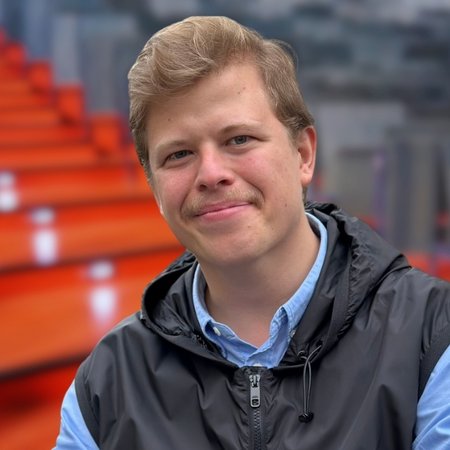
معرفی
Professor Günter Maier is a distinguished academic in Work and Organizational Psychology at Bielefeld University, Germany, situated within the Faculty of Psychology and Sport Science, Department of Psychology (Unit 10 - Work and Organizational Psychology). He maintains dual affiliations with the Department of Psychology and the Research Institute for Cognition and Robotics (CoR-Lab), reflecting his interdisciplinary approach bridging psychology with robotics and artificial intelligence.
His academic journey began with a Diploma (MSc) in Psychology from LMU Munich in 1992, followed by a summa cum laude Doctorate in 1996. After positions as Research Assistant, Scientific Associate, and Assistant Professor at LMU Munich, he joined Bielefeld University as Professor in Work and Organizational Psychology in 2003, where he continues his tenure. His research spans human-robot interaction dynamics, leadership behavior, corporate social responsibility, and AI implementation in workplace contexts.
Professor Maier's research reveals fascinating asymmetries in human social responses to robots versus humans, demonstrating that exclusion by robot coworkers hurts less while inclusion by human coworkers satisfies more. His work on leadership examines daily behaviors and their impact on leader well-being through team identification, while his CSR research investigates relationships with employee green behavior and potential negative consequences. His recent publications increasingly focus on AI ethics in personnel selection, healthcare scheduling, and resource allocation.
Methodologically, he has pioneered AI-assisted research tools, developing techniques for creating AI-generated images for vignette studies and evaluating GPT models for qualitative data analysis. His work aligns with Bielefeld University's strategic research area of the Socio-Technical World, investigating how humans, robots and AI interact in complex environments.
As an educator, Professor Maier teaches across multiple Work and Organizational Psychology modules, including Basic and Advanced Applied Subject courses and Project Modules in Work, Organizational and Social Psychology. His teaching reflects his research interests, preparing students for technology-integrated workplaces through modules like 27-AF-AO1, 27-AF-AO2, and 27-AP-ProjectAOS.