معرفی
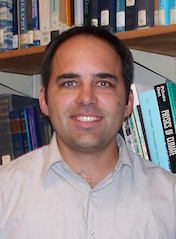
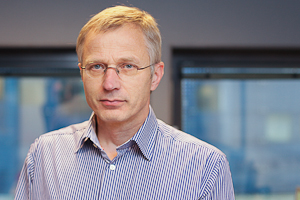
Dr. ir. Fred W. Wubs is an Associate Professor of Numerical Mathematics at the University of Groningen's Faculty of Science and Engineering, specifically within the Bernoulli Institute for Mathematics and Computer Science. His research spans multiple disciplines connecting applied mathematics with real-world applications in biomechanics and climate science. Based at the Bernoulliborg (room 451) in Groningen, Netherlands, he maintains active research collaborations across engineering, medical, and environmental fields.
Wubs' research interests focus on numerical methods development and application, with particular expertise in finite element analysis, bifurcation theory, and computational modeling of complex systems. His work bridges theoretical mathematics with practical applications, spanning from biomechanical analysis of mandibular fractures to ocean circulation modeling and climate system dynamics. His fingerprint analysis reveals strong contributions in matrix mathematics (100%), bifurcation analysis (81%), time-stepping methods (58%), factorization techniques (58%), and Jacobian matrix applications (52%).
His publication record shows a clear dual trajectory: one stream applying numerical methods to biomedical problems (particularly mandible fracture mechanics and orthopedic implant design), and another focused on climate and ocean modeling (including ocean circulation, ice sheet dynamics, and Earth system modeling). This interdisciplinary approach demonstrates how fundamental numerical mathematics can address diverse challenges across seemingly unrelated fields.
Wubs has supervised 5 research projects as indicated by his academic profile, though specific student names aren't provided in the available information. His work has been cited extensively, with some publications receiving over 25 citations in Scopus. His research appears in high-impact journals including Scientific Reports, Journal of Advances in Modeling Earth Systems, and Journal of Computational Physics.
He maintains active laboratory work in numerical simulation, with recent publications indicating ongoing projects in biomechanical testing validation using 3D printed models and advanced computational techniques for ocean and climate modeling. His work on physics-controlled echo state networks represents an innovative integration of machine learning with traditional numerical methods.