معرفی
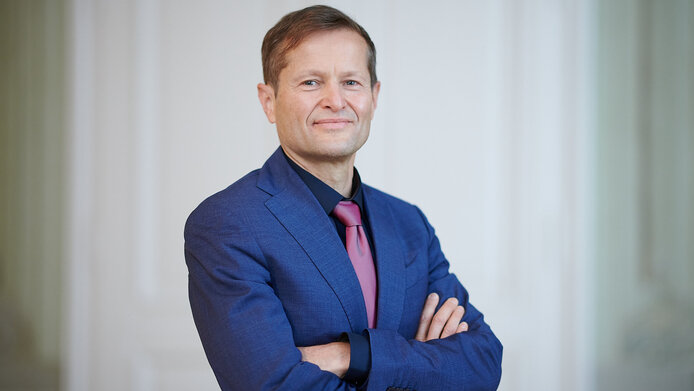
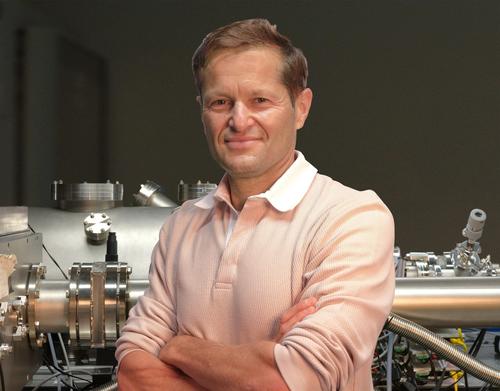
Ferenc Krausz, a Hungarian-Austrian physicist, is a Director at the Max Planck Institute of Quantum Optics and holds the Chair of Experimental Physics-Laser Physics at Ludwig Maximilian University of Munich. He pioneered attosecond physics, enabling the observation of electron dynamics in atoms, and was awarded the 2023 Nobel Prize in Physics for this groundbreaking work.
- Doctorate in Quantum Electronics (1991) and Venia Docendi (1993) at TU Wien
- Co-laureate with Anne L'Huillier and Pierre Agostini for Nobel Prize
- Developed high-energy ultrashort lasers for electron dynamics research
- Explored medical applications like infrared molecular fingerprinting for disease detection
His research focuses on attosecond physics, ultra-short laser pulses, and quantum optoelectronics. He aims to apply attosecond technology to revolutionize medical diagnostics and electronics. Recent publications highlight applications in 2D material imaging, molecular fingerprinting, and field-resolved spectroscopy, with keywords spanning quantum electronics, photonics, and biomedical engineering.
Scientific Awards:
- Nobel Prize in Physics (2023)
- FWF Wittgenstein Award (2002)
- FWF START Award (1996)
Krausz’s work has driven innovations in attosecond measurement techniques, supported by grants from the Austrian Science Fund (FWF) and the Max Planck Society. His team’s experiments at TU Wien in 2001 demonstrated attosecond pulses, now applied in fields from quantum computing to cancer diagnostics. He emphasizes the importance of academic freedom and international collaboration, citing mentor Arnold Schmidt and the FWF’s unrestricted funding as critical to his success.