
معرفی
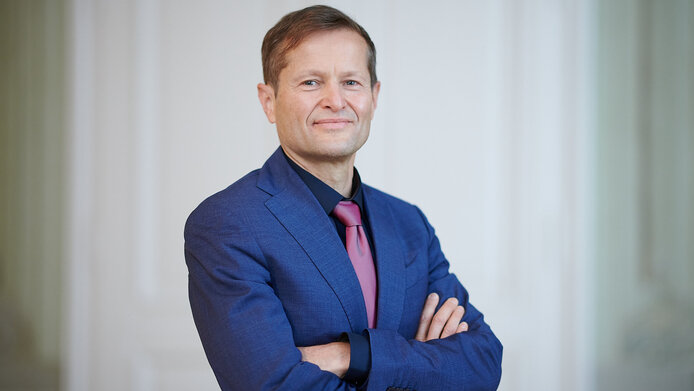
Ferenc Krausz is a Hungarian-Austrian physicist and Director at the Max Planck Institute of Quantum Optics in Garching, where he leads the Attosecond Physics Division. He is also a Professor of Experimental Physics at Ludwig-Maximilians-Universität München (LMU). His groundbreaking work in generating and measuring attosecond light pulses revolutionized our ability to observe electron dynamics in real time. He was awarded the 2023 Nobel Prize in Physics for this achievement, alongside Anne L'Huillier and Pierre Agostini.
- Born: 1962, Mór, Hungary
- Doctorate: Quantum Electronics, Vienna University of Technology (1991)
- Habilitation: 1993, Vienna University of Technology
- Professor: Technical University of Vienna (1999)
- Director: Max Planck Institute of Quantum Optics (2003–present)
- Chair: Experimental Physics, LMU Munich (2004–present)
Ferenc Krausz's research centers on attosecond physics, enabling the real-time observation of electron motion within atoms and molecules. His work blends ultrafast laser science, quantum optics, and solid-state physics to explore fundamental processes in nature. He has pioneered techniques such as high-harmonic generation and attosecond metrology, with applications in understanding chemical reactions at the electronic level. His current interests extend into medical diagnostics, where he develops infrared fingerprinting of blood to detect diseases like cancer and diabetes long before symptoms appear. He also investigates light-wave electronics, aiming to control electric currents at optical frequencies to enable computers up to 100,000 times faster than today’s devices.
Krausz’s scientific awards reflect his transformative contributions to physics. He received the FWF START Award in 1996, enabling him to establish his research group at TU Wien. In 2002, he was awarded the FWF Wittgenstein Prize, Austria’s most prestigious research grant. The pinnacle of recognition came in 2023 with the Nobel Prize in Physics for his foundational work in attosecond physics.
Krausz has led major research initiatives, including the FWF-funded Special Research Area 'Advanced Light Sources (ADLIS)' and the development of the attosecond streak camera. He emphasizes the importance of scientific freedom, international collaboration, and curiosity-driven research. His leadership at the Max Planck Institute fosters innovation in both fundamental and applied physics.
Krausz’s work began at the Vienna University of Technology, where his team achieved the first generation and measurement of attosecond pulses on September 8, 2001. This breakthrough, conducted in the basement laboratories of TU Wien, laid the foundation for attosecond science. He continues to lead a vibrant research team at the Max Planck Institute, pushing the boundaries of ultrafast science and its societal applications.
Ferenc Krausz در سایتهای دیگر
جستوجوهای مرتبط
شاید اینها هم برایتان مناسب باشند
 Ferenc KrauszParis Lodron University of Salzburg · استاد
 Ferenc KrauszFree University of Berlin · استاد
 Krausz FerencGraz University of Technology · استاد
- FFerenc KrauszMax Planck Institute of Quantum Optics · استاد
 Anne L'HuillierETH Zurich · استاد
 Ferenc KrauszLudwig Maximilian University of Munich · استاد