معرفی
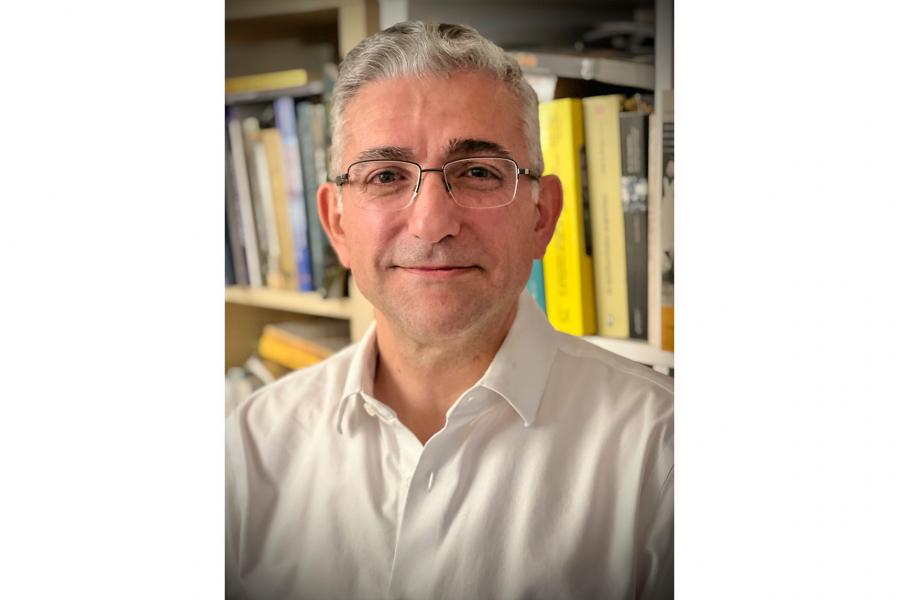
Eric Zolov is Professor of History at Stony Brook University, where he teaches in the Department of History within the College of Arts and Sciences. He holds a PhD from the University of Chicago (1995) and is a leading scholar in modern Latin American history, with a focus on Mexico, U.S.-Latin American relations, and the cultural dynamics of the Cold War era, particularly the 'Global Sixties.'
- University: Stony Brook University
- Department: Department of History
- Office: SBS N-331
- Email: eric.zolov@stonybrook.edu
His research is highly interdisciplinary, integrating cultural, political, and diplomatic history. His award-winning book, The Last Good Neighbor: Mexico in the Global Sixties (2020), explores Mexico’s role as a Cold War interlocutor and won the María Elena Martínez Prize. He co-authored The Walls of Santiago: Social Revolution and Political Graphics in Contemporary Chile (2022), based on fieldwork during the 2019 Chilean uprising. His current project investigates the geopolitical resonance of bossa nova between 1959 and 1964.
Zolov’s recent publications reflect a consistent engagement with transnational protest, visual culture, and Cold War cultural politics. His articles and op-eds in The Nation, Brooklyn Rail, and academic journals demonstrate his ability to bridge scholarly and public discourse. He has taught courses such as 'Modern Latin America,' 'The Global Sixties,' and 'Cuba: Island of Consequence,' indicating a strong commitment to undergraduate and graduate education.
- María Elena Martínez Prize (2021) – For The Last Good Neighbor
- Fulbright Visiting Scholar (2019) – Pontificia Universidad Católica, Santiago, Chile
Zolov has advised and collaborated with scholars and institutions internationally. While no formal list of students is provided, his editorial and collaborative projects suggest active mentorship. His work on protest graphics and sonic history indicates involvement in digital and visual humanities initiatives. Though no specific lab or team is named, his fieldwork in Chile and editorial projects imply leadership in collaborative, interdisciplinary research groups focused on global protest and cultural memory.