معرفی
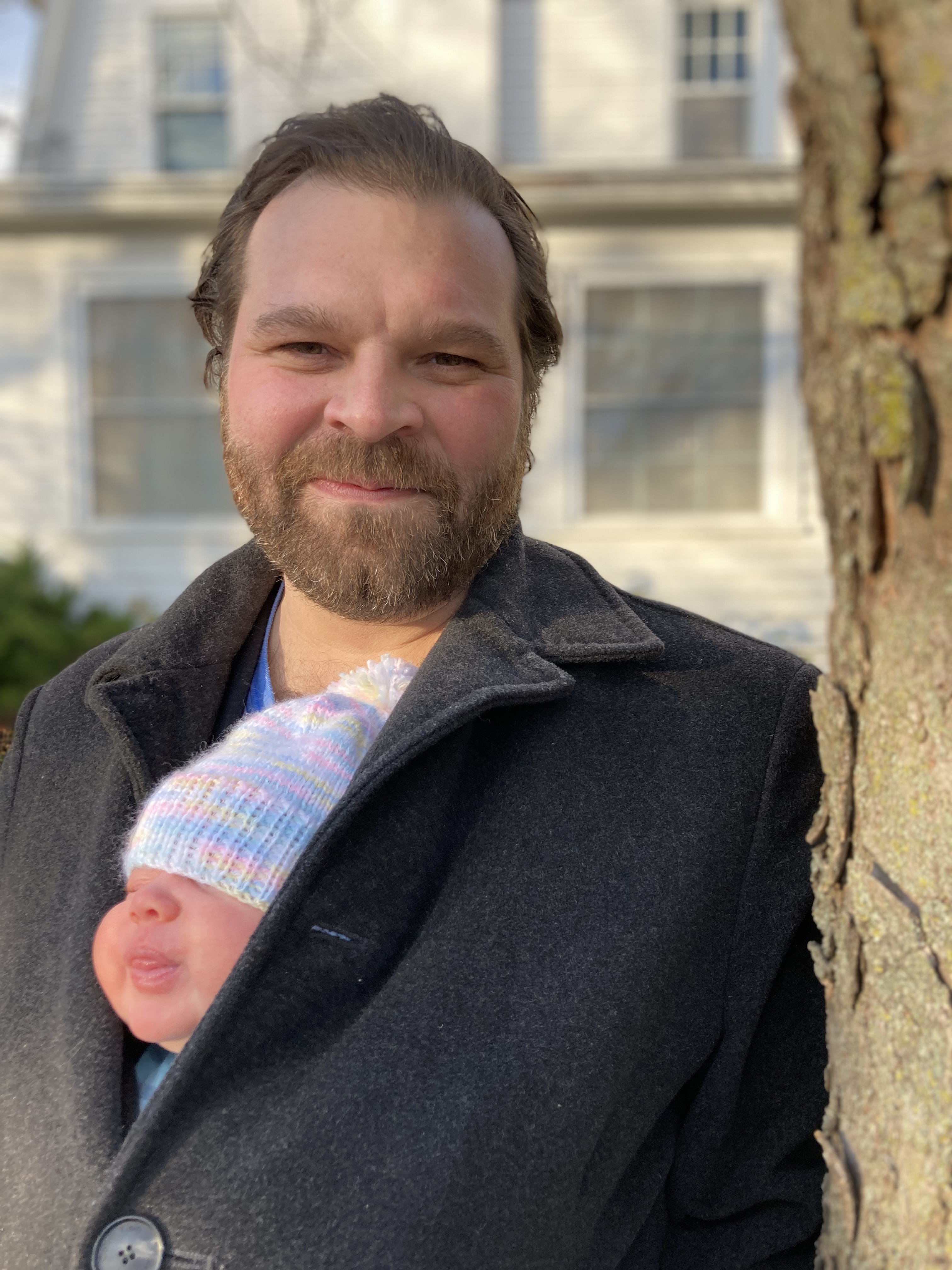
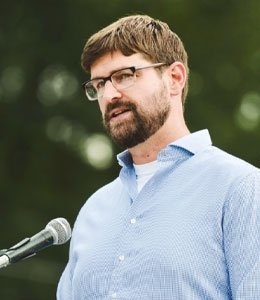
Eric Miller is a Professor in the Department of Communication Studies, Media and Journalism at Bloomsburg University, where he joined the faculty in 2013 after completing his Ph.D. at Pennsylvania State University. His academic work focuses on rhetoric within American discourse, with particular attention to the intersections of Christianity, conservatism, capitalism, and climate change.
Miller's educational background includes a Ph.D. from Penn State University, an M.A. from the University of Maine, and a B.A. from the University of Pittsburgh. His scholarly contributions include two edited volumes: Rhetoric of the Protestant Sermon in America: Pulpit Discourse at the Turn of the Millennium (2020) and The Rhetoric of Religious Freedom in the United States (2018), with additional publications appearing in journals such as Rhetoric & Public Affairs, Journal of Communication and Religion, and Advances in the History of Rhetoric.
Miller specializes in rhetorical analysis of American political and religious discourse, with a particular focus on how conservative Christian thought intersects with broader cultural and political movements. His research examines the rhetorical strategies employed in religious freedom debates, conservative political movements, and environmental discourse. Through his blog posts and academic publications, Miller consistently analyzes how historical narratives shape contemporary political and religious identities in America.
His recent publications demonstrate a growing interest in the intersections of environmental thought, political extremism, and religious narratives in American culture. Miller's work on utopian literature, evangelical narratives, and the history of American conservatism reveals his commitment to understanding how rhetorical frameworks shape collective identity and political possibilities.
As an educator, Miller teaches within the department's Leadership and Public Advocacy concentration, bringing a 'civic engagement' focus to his courses. He emphasizes not just rhetorical skill development but also the ethical dimensions of public discourse, encouraging students to think seriously about both how and what they communicate as citizens.