
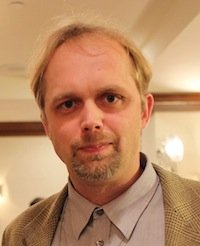
Ergo-Hart Västrik
مدرس · Folk religion of Estonians and other Baltic-Finnic peoples
University of Tartuمعرفی
Ergo-Hart Västrik is a Lecturer in Estonian and Comparative Folkloristics at the University of Tartu's Faculty of Arts and Humanities, Institute of Cultural Research (0.2 FTE). His research focuses on folk religion among Estonians and other Baltic-Finnic peoples, historiography of folklore studies, and ethnographic representation. He holds a Doctorate (2007) and Master's (1999) from the University of Tartu.
Education:
- PhD in Folklore Studies, University of Tartu (2001–2007)
- MA in Estonian and Finno-Ugric Philology, University of Tartu (1997–1999)
- BA in Estonian and Finno-Ugric Philology, University of Tartu (1991–1997)
Research Interests:
His work examines the religious traditions of Baltic Finno-Ugric peoples, including Votians, Izhorians, and Ingrians. He has conducted extensive fieldwork in Russia's Leningrad Oblast, analyzing folk religious practices, ethnic identity revival, and the intersection of folklore with nationalism. Key themes include the Maausulised movement in Estonia and the historical documentation of pre-Christian traditions.
Publications:
Over 100 works, including edited volumes like Journal of Ethnology and Folkloristics (2009–2018) and studies on Votian religious descriptions, Ingrian seuralaiset movement, and Estonian folk calendar traditions. Recent contributions focus on contemporary cultural heritage projects and Finno-Ugric identity politics.
Grants & Projects:
- Principal investigator for Basic study on conservation management of Lahemaa National Park (2019–2021)
- Contributed to EU-funded EuNaMus: European National Museums (2010–2013)
Roles:
- Editor-in-Chief of Journal of Ethnology and Folkloristics (2009–2018)
- Member of Societé Internationale d'Ethnologie et de Folklore (SIEF)
- Co-founder of Kodavere Heritage Centre (2019–present)