معرفی
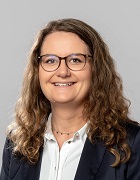
Emrecan Söylemez serves as an Associate Professor in the Department of Mechanical Engineering at Istanbul Technical University, where he leads cutting-edge research in advanced manufacturing technologies. His academic profile is defined by 21 research publications and 11 major projects as Principal Investigator, with an h-index of 9 and over 321 Scopus citations reflecting significant scholarly impact. His work bridges theoretical modeling and experimental validation across mechanical engineering and materials science disciplines.
Dr. Söylemez's research centers on Additive Manufacturing with specialized expertise in Powder Bed Fusion (laser/electron beam) and Binder Jet processes. He investigates critical phenomena including melt pool dynamics, surface roughness effects, and thermal behavior during manufacturing. His contributions to Fatigue Crack Growth analysis in recycled carbon black-reinforced polymers demonstrate practical applications for sustainable materials. Recent work integrates Machine Learning for multi-objective process optimization, revealing interdisciplinary innovation in manufacturing science.
Analysis of his 21 publications shows dominant focus on additive manufacturing process optimization (75% of recent work), particularly parameter effects on structural performance. Key trends include AI-driven modeling for binder jet sintering (2023-2025), RF filter manufacturing via laser powder bed fusion (2024), and thermal modeling for electron beam systems (2024). His research uniquely connects polymer fatigue mechanics with metal additive manufacturing, creating cross-disciplinary insights applicable to aerospace, medical implants, and electronics.
As Principal Investigator for 11 projects including TUBITAK-funded initiatives, Dr. Söylemez directs research on binder jet sintering modeling, AI-supported process monitoring, and Fe-50Ni soft magnetic core production. His $1.2M+ project portfolio spans 2021-2026, with current work focusing on AI-enhanced manufacturing software and metal-ceramic composite development. He has supervised 2 graduate students while maintaining strong industry collaboration through 1773TTO and SRP programs, demonstrating effective knowledge transfer from academia to industrial applications.